


T: +86-19511798062
E: sales@honestflex.com
E: sales@honestflex.com
Licang District, Qingdao, Shandong, China
Views: 0 Author: Site Editor Publish Time: 2026-10-19 Origin: Site


Hydraulic hose bend radius is an important factor in hose selection, installation, and maintenance. If a hose bends too sharply, its internal structure may become damaged. This can restrict fluid flow, weaken reinforcement layers, and increase the risk of premature failure.
Understanding the minimum bend radius helps engineers and equipment operators plan safer hose routes. It also helps buyers select suitable hoses for systems with limited installation space.
This guide explains hydraulic hose bend radius, common bending problems, measurement methods, and practical ways to prevent kinking and hose failure.
Table of Contents
Hydraulic hose bend radius refers to the radius of the curve formed when a hose bends. The minimum bend radius is the smallest radius specified by the manufacturer for a particular hose model and size.
A hose should not be bent beyond this limit during installation or operation. Excessive bending can deform the hose and damage its reinforcement.
The minimum bend radius affects several aspects of hydraulic hose performance:
Flexibility: A smaller minimum bend radius allows tighter hose routing.
Installation space: Hoses with smaller bend radii are easier to install in compact equipment.
Structural integrity: Proper bending helps protect the tube and reinforcement layers.
Fluid flow: Excessive bending can deform the hose and restrict internal flow.
Service life: Avoiding sharp bends helps reduce mechanical stress and premature wear.
A suitable bend radius allows the hose to accommodate normal equipment movement without excessive stress.
Several factors affect the minimum bend radius of a hydraulic hose.
Hose Diameter
Larger hoses generally require larger bend radii. Always check the value for the exact hose size rather than estimating it from the outside diameter.
Reinforcement Structure
Wire braid, spiral wire, and textile reinforcement designs have different flexibility characteristics. However, reinforcement type alone does not determine the minimum bend radius. The complete hose construction and manufacturer specifications must be considered.
Hose Materials
The inner tube and outer cover materials influence flexibility under different operating conditions. Material selection should match the hydraulic fluid and temperature requirements.
Operating Conditions
Pressure, temperature, vibration, and repeated movement can affect hose stress during operation. The selected hose must meet the requirements of the complete hydraulic system.
Manufacturers provide minimum bend radius values in product datasheets. These values vary by hose model and nominal diameter.
For example, Honestflex publishes minimum bend radius data for its EN 857 1SC and EN 857 2SC hydraulic hoses. Buyers should check the relevant product specifications before installation.
Do not use the bend radius of one hose model as a reference for another model, even when their nominal sizes are the same.
Bending a hydraulic hose too tightly can cause several problems. Some damage may appear immediately, while other issues develop after repeated operation.
A kink is a sharp bend that causes the hose body to flatten or collapse.
This deformation reduces the available flow area and places additional stress on the hose structure. Severe kinking can damage reinforcement layers and weaken the hose.
A hose with visible kinks should not continue operating without inspection and assessment. Replace damaged hoses when required.
Excessive bending can place uneven stress on the tube and reinforcement. Repeated movement may make this damage worse.
Potential results include:
Cracks in the outer cover
Damaged or exposed reinforcement wires
Leaks along the hose body
Reduced pressure-handling capability
Sudden hose failure
The risk increases when tight bends occur near fittings or moving equipment components.
A sharply bent hose may become flattened or partially collapsed. This reduces the internal flow area and increases resistance to fluid movement.
As a result, the hydraulic system may experience reduced flow or unstable operation. The actual pressure loss depends on the hose deformation and system conditions.
Maintaining the specified bend radius helps preserve the hose's internal shape and support normal fluid flow.
Visible Sign | Possible Cause | Recommended Action |
|---|---|---|
Sharp kink | Bend radius is too small | Check routing and replace damaged hose |
Flattened hose section | Excessive bending or external compression | Inspect the affected section |
Cracks near bends | Repeated bending stress or material aging | Assess and replace if damaged |
Exposed steel wires | Cover abrasion or mechanical damage | Replace the hose |
Leakage near fittings | Excessive end stress or assembly problems | Inspect routing, fittings, and assembly |
Regular inspections help identify these problems before they cause equipment downtime.
Measuring the bend radius helps confirm whether a hose route meets the manufacturer's requirements.
Identify the hose model and nominal size. Then find its minimum bend radius in the product datasheet.
Do not assume that two hoses with the same nominal diameter have the same minimum bend radius.
Use a bend radius gauge or a suitable radius template to check the curved section.
For a practical on-site check:
Identify the tightest bend along the hose route.
Locate the centerline of the hose along the curved section.
Use an appropriate gauge or template to assess the bend radius.
Compare the measurement with the manufacturer's specified minimum.
Adjust the routing if the bend is too tight.
Follow the manufacturer's measurement method when available. Ensure the hose is not twisted or compressed during measurement.
The following values are taken from the published Honestflex EN 857 1SC and 2SC product specifications.
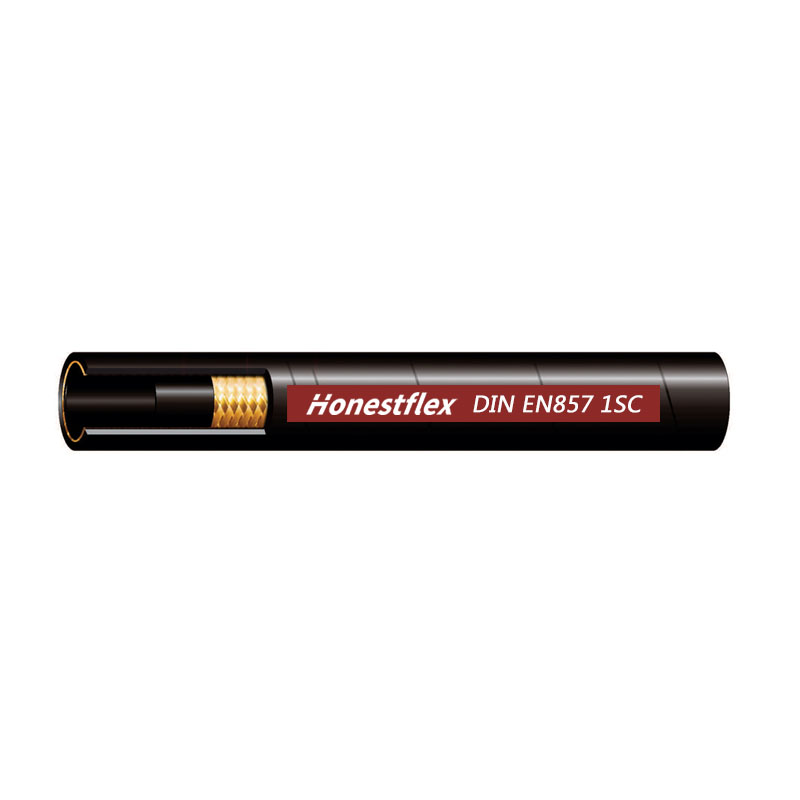 | 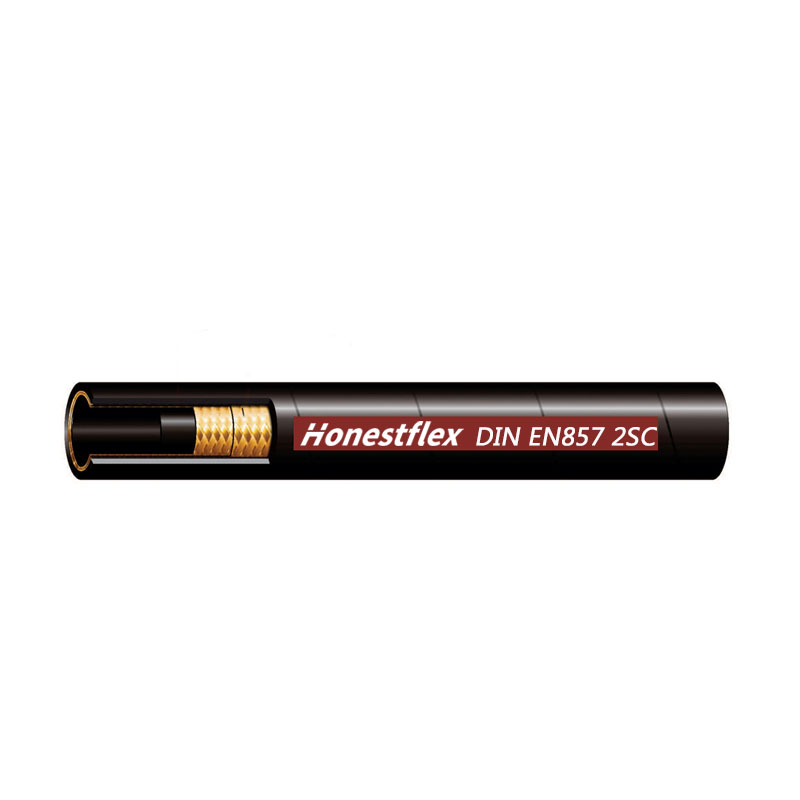 |
Hose Size | EN 857 1SC | EN 857 2SC |
|---|---|---|
1/4" | 75 mm | 75 mm |
3/8" | 90 mm | 90 mm |
1/2" | 130 mm | 130 mm |
3/4" | 180 mm | 200 mm |
1" | 230 mm | 250 mm |
These values show why buyers should check the exact product size. The minimum bend radius is not determined by the hose designation alone.
Always refer to the latest product datasheet before designing or installing a hydraulic hose assembly.
Correct installation helps prevent excessive bending, twisting, and mechanical stress.
Check the available space and identify possible obstacles before installing the hose.
Plan a route that allows smooth curves and avoids sharp corners. Consider the movement of cylinders, booms, and other machine components.
Allow enough hose length for normal movement. A hose that is too short may become stretched or bent too sharply during operation.
Hose twisting places additional stress on the reinforcement layers.
Check the hose layline during installation. It should not spiral around the hose after the fittings are connected.
Use suitable fitting orientations to reduce torsional stress. Do not twist the hose to make the connections fit.
Use suitable clamps and brackets to keep hoses in position.
However, do not clamp hoses so tightly that their movement or natural shape is restricted.
Keep hoses away from sharp edges, hot surfaces, and moving machine parts. Where contact cannot be avoided, consider suitable protective accessories.
Elbow fittings and adapters can help change hose direction without forcing the hose into a sharp bend.
Bend restrictors can provide additional support near hose connections. Protective sleeves and spiral guards help reduce external abrasion and mechanical damage.
These accessories serve different purposes. They do not replace the need to follow the minimum bend radius.
Preventing hose damage requires proper product selection, installation, and routine inspection.
Check the installation space before choosing a hydraulic hose.
If the system has limited clearance, consider a hose designed for compact routing. Compare the minimum bend radius, outside diameter, working pressure, and fluid compatibility.
Honestflex offers EN 857 1SC and EN 857 2SC compact hydraulic hoses for applications where installation space is an important consideration.
Hoses may rub against machine frames, metal edges, or other components during operation.
Protective accessories can reduce external wear.

Common options include:
Spiral hose guards: Help protect against abrasion, cuts, and crushing.
Nylon sleeves: Provide an additional protective layer against mechanical wear.
Silicone fire sleeves: Help protect hoses from heat and sparks.
Bend restrictors: Provide support near hose connections to reduce excessive bending.
Choose protection according to the actual operating environment.
The hose must be suitable for the system's maximum working pressure and temperature.
Pressure surges can increase stress on hose reinforcement. Use appropriate system controls and select a hose with a suitable pressure rating.
Keep hoses away from excessive heat where possible. Confirm that the hose material is compatible with the hydraulic fluid and operating temperature.
Inspect hydraulic hoses as part of routine equipment maintenance.
Pay particular attention to:
Sharp bends and flattened sections
Twisting along the hose length
Cracks, blisters, or exposed reinforcement
Abrasion near clamps and machine contact points
Leaks around hose fittings
Changes in hose position after equipment movement
Replace hoses that show signs of serious damage. Do not attempt to repair a damaged high-pressure hose by simply changing its routing.
Understanding the symptoms of bending-related damage helps maintenance teams identify problems and take corrective action.
Possible causes:
The bend radius is below the manufacturer's limit.
The hose is too short for the installation route.
Machine movement forces the hose into a sharp bend.
External components compress the hose.
Solutions:
Re-route the hose with a larger bend radius.
Select a hose with suitable dimensions and flexibility.
Check clearance around moving components.
Replace hoses with permanent kinks or deformation.
Possible causes:
Incorrect fitting orientation.
Hose rotation during assembly.
Poor routing around moving components.
Solutions:
Align the fittings before tightening.
Check the hose layline during installation.
Use suitable fittings and routing arrangements.
Replace hoses showing signs of structural damage.
Possible causes:
Repeated bending stress.
Excessive movement near fittings.
Abrasion against nearby components.
Incorrect hose assembly.
Solutions:
Inspect the hose and fittings.
Correct the routing and support arrangement.
Check the assembly against manufacturer instructions.
Replace damaged hose assemblies.
Problems near couplings may result from incorrect assembly, unsuitable fittings, excessive bending stress, or insufficient hose length.
Check the crimping specifications, fitting compatibility, and hose routing. Do not continue operating a leaking or damaged high-pressure hose.
When installation space is limited, the minimum bend radius should be considered alongside pressure and size requirements.
Before choosing a hose, review these factors:
Selection Factor | What to Check |
|---|---|
Minimum bend radius | Compare the manufacturer's value with the available routing space |
Working pressure | Confirm the rating meets the system requirements |
Hose diameter | Match the required flow and connection size |
Reinforcement | Select a construction suitable for operating pressure |
Temperature | Check both ambient and hydraulic fluid temperatures |
Fluid compatibility | Confirm compatibility with the inner tube material |
Fittings | Ensure connection types and assembly methods are suitable |
A compact hose may help solve routing problems, but it must still meet the pressure, temperature, and fluid requirements of the system.
Hydraulic hose bend radius plays an important role in installation quality, system performance, and hose service life.
Bending a hose too tightly can cause kinking, internal deformation, reinforcement damage, and premature failure. Correct hose selection, careful routing, and regular inspection help reduce these risks.
Always check the manufacturer's minimum bend radius for the exact hose model and size. Use suitable fittings and protective accessories where necessary, and replace hoses with visible structural damage.
Honestflex supplies hydraulic hoses and hose protection products for different industrial applications. Contact our team to discuss hose sizes, pressure requirements, minimum bend radius, and suitable protection options for your equipment.
The minimum bend radius is the smallest radius specified by the manufacturer for a particular hose model and size. Bending below this limit may damage the hose structure.
Excessive bending can cause kinking, flattening, reinforcement damage, and restricted fluid flow. It may also increase the risk of leaks and premature hose failure.
Check the manufacturer's specification first. Then use a suitable bend radius gauge or template to assess the tightest curve along the hose route.
Choose a hose with a suitable minimum bend radius, plan the routing carefully, avoid twisting, and provide enough hose length for normal movement. Use suitable fittings and supports where necessary.
Hose guards mainly protect against external abrasion, cuts, and mechanical damage. They do not replace correct hose routing or the manufacturer's minimum bend radius requirements.
