


T: +86-19511798062
E: sales@honestflex.com
E: sales@honestflex.com
Licang District, Qingdao, Shandong, China
Views: 0 Author: Site Editor Publish Time: 2025-10-30 Origin: Site


Have you ever wondered how industries achieve smooth surfaces on metal or concrete? The secret lies in sandblasting, a technique that requires a crucial component: the sandblast hose. These hoses play a pivotal role in directing abrasive materials during sandblasting operations, ensuring efficiency and safety. In this post, you'll learn about the types, materials, and best practices for selecting and maintaining sandblast hoses, essential for various industrial applications.
When it comes to sandblast hose selection, understanding the types available is key to ensuring optimal performance and safety in your sandblasting operations. Different materials and constructions cater to various job demands, pressure ratings, and abrasive types. Here’s a breakdown of the most common sandblast hose types:
Rubber sandblast hoses are the most widely used due to their excellent flexibility and abrasion resistance. They feature a durable rubber inner tube that withstands the constant impact of abrasive media like aluminum oxide or steel grit. The outer rubber cover protects against external wear and environmental factors such as UV exposure and chemicals.
Advantages: High durability, flexibility, and resistance to wear and tear.
Ideal for: Heavy-duty industrial applications where maneuverability and toughness are essential.
Examples: Clemco sandblast hose is a popular rubber hose brand known for quality and reliability.
Polyurethane hoses are lighter and offer superior abrasion resistance compared to rubber. Their smooth inner surface reduces friction, enabling better abrasive flow and less pressure loss. This makes them ideal for long runs where maintaining pressure is critical.
Advantages: Lightweight, excellent abrasion resistance, and longer service life.
Ideal for: Jobs requiring extended hose lengths and high abrasion resistance.
Considerations: Typically more expensive than rubber hoses but provide better longevity.
PVC sandblast hoses are a budget-friendly option suitable for light to medium-duty applications. They are lightweight and chemically resistant but offer less abrasion resistance and flexibility compared to rubber or polyurethane.
Advantages: Cost-effective and easy to handle.
Ideal for: Residential or smaller commercial tasks with moderate pressure.
Limitations: Not recommended for high-pressure or heavy abrasive use due to reduced durability.
Heavy-duty hoses are engineered for the most demanding sandblasting jobs. They often feature multiple reinforcement layers, including steel wire braiding, to withstand extreme pressures and harsh environments. Their larger diameters accommodate higher abrasive flow rates.
Advantages: Exceptional pressure tolerance, durability, and abrasion resistance.
Ideal for: Industrial-scale projects like shipyards, large construction sites, and heavy machinery cleaning.
Trade-offs: Heavier and less flexible, requiring careful handling.
Tip: Always match the sandblast hose type to your specific abrasive media and pressure requirements to maximize hose life and blasting efficiency. For example, use polyurethane hoses for high-abrasion jobs and rubber hoses when flexibility is paramount.
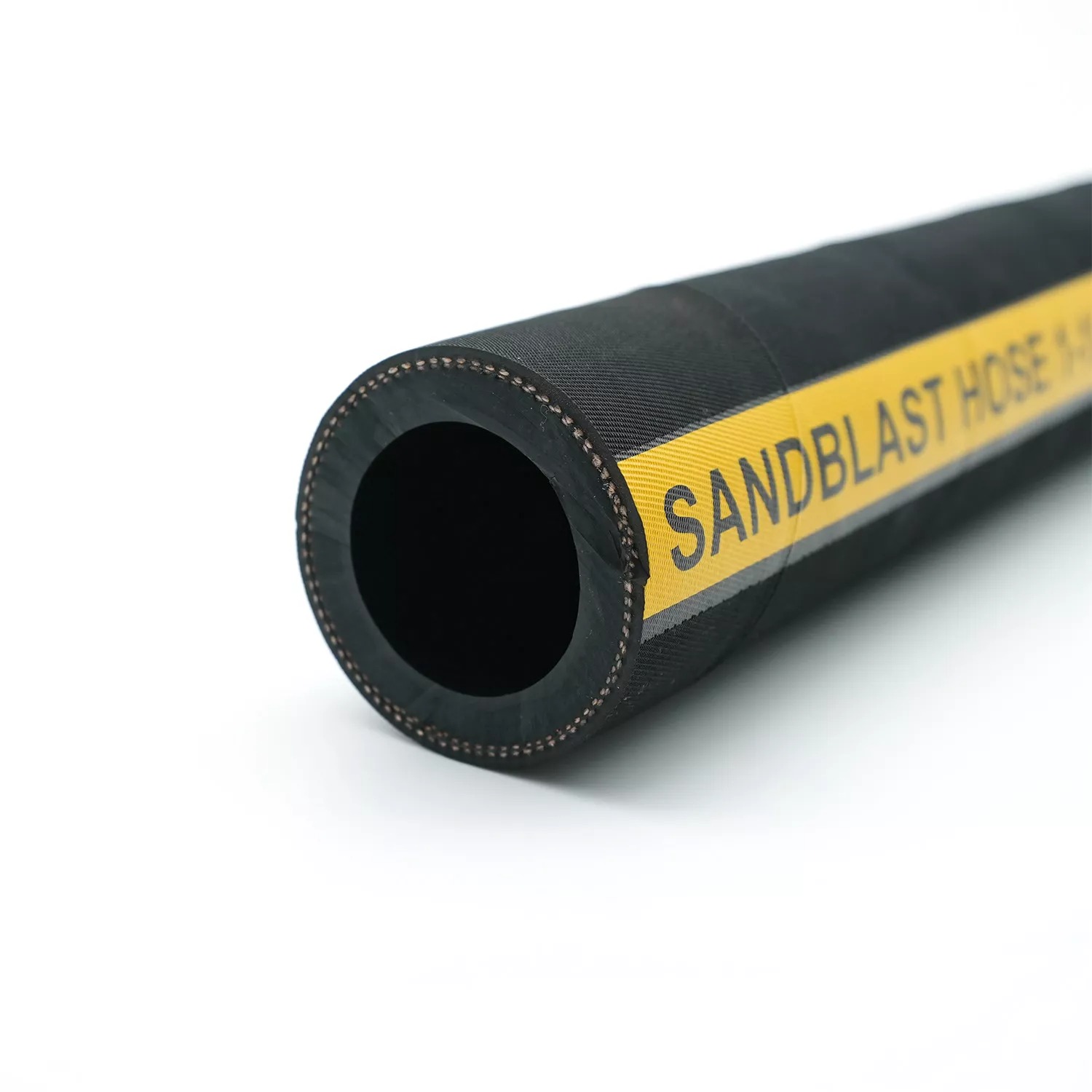
Understanding the materials that make up a sandblast hose is essential for selecting the right hose that balances durability, flexibility, and performance. A typical sandblaster hose consists of three main layers: the inner tube, the reinforcement layer, and the outer cover. Each layer plays a specific role in ensuring the hose withstands the harsh conditions of abrasive blasting.
The inner tube is the part of the sandblast hose that comes into direct contact with abrasive media such as aluminum oxide, steel grit, or glass beads. Because of this constant exposure, it must be highly abrasion-resistant to prevent premature wear.
Common materials for the inner tube include:
Natural Rubber: Offers excellent abrasion resistance and flexibility. It is commonly used in many sandblaster hoses, including popular brands like Clemco sandblast hose. It performs well under high-pressure conditions but may be less resistant to certain chemicals.
Polyurethane: Known for superior abrasion resistance and a smooth inner surface, polyurethane reduces friction and pressure loss inside the hose. This material is lighter than rubber, making the hose easier to handle during long operations.
PVC (Polyvinyl Chloride): PVC is less abrasion-resistant but offers chemical resistance and is cost-effective. It’s typically used for light to medium-duty sandblasting where high abrasion is not a concern.
The reinforcement layer provides the hose with strength and pressure resistance. It prevents the hose from bursting under the high pressures common in sandblasting operations and helps maintain hose shape and flexibility.
Typical reinforcement materials include:
Textile Braids: Layers of woven synthetic fibers such as polyester or nylon. They provide flexibility and moderate pressure resistance.
Steel Wire Braids or Spirals: Used in heavy-duty or high-pressure sandblast hoses, steel reinforcement significantly increases burst pressure tolerance and durability. However, it adds weight and reduces flexibility.
The number of reinforcement layers varies by hose type. Heavy-duty hoses may have multiple textile layers combined with steel wire for maximum strength.
The outer cover protects the hose from external damage such as abrasion, UV radiation, chemicals, and environmental factors. It also shields the reinforcement layers and inner tube.
Common outer cover materials include:
Synthetic Rubber (e.g., EPDM, Neoprene): These materials resist ozone cracking, UV degradation, and chemical exposure. They provide excellent abrasion resistance, especially important when the hose is dragged over rough surfaces.
PVC: Used in some lighter-duty hoses, PVC covers offer chemical resistance but less abrasion protection.
The outer cover’s durability directly impacts the hose’s lifespan, especially in demanding environments like construction sites or shipyards.
Tip: When choosing a sandblast hose, ensure the inner tube material matches your abrasive media type for optimal wear resistance, and select reinforcement and outer cover materials based on your pressure requirements and environmental conditions to maximize hose longevity and safety.
Selecting the right sandblast hose is crucial for achieving efficient, safe, and high-quality sandblasting results. The hose must handle abrasive materials, maintain pressure, and offer flexibility for maneuvering. Here are key best practices to guide your choice:
The pressure rating of a sandblast hose must exceed your system’s maximum operating pressure. This rating ensures the hose can withstand the intense force of compressed air and abrasive media without bursting. For example, if your system runs at 100 PSI, choose a hose rated for at least 150 PSI to provide a safety margin. Overlooking this can lead to dangerous hose failures and costly downtime.
The inner diameter (ID) directly affects abrasive flow and pressure loss. A hose with too small an ID restricts abrasive flow, reducing blasting efficiency and increasing wear. Conversely, an oversized hose can lower abrasive velocity, diminishing cleaning power. A good rule of thumb is to select a blast hose with an ID about three times the nozzle orifice size. For instance, a 1/4-inch nozzle pairs well with a 3/4-inch hose. This sizing balances flow rate and pressure, ensuring consistent abrasive delivery.
| Nozzle Size | Recommended Hose ID |
|---|---|
| 1/8 inch | 3/8 inch |
| 1/4 inch | 3/4 inch |
| 3/8 inch | 1 1/4 inch |
| 1/2 inch | 1 1/2 inch |
Hose length impacts pressure and operator comfort. Longer hoses increase friction losses, causing pressure drops at the nozzle. This reduces abrasive velocity, impairing blasting quality. Keep hose length as short as practical for the job. If longer reach is necessary, increase the hose diameter to compensate for pressure loss. For example, a 50-foot hose may require a larger diameter than a 25-foot hose to maintain performance. Also, consider the flexibility and weight; excessively long hoses can be cumbersome.
Material choice affects durability, flexibility, and resistance to abrasive wear:
Rubber hoses offer excellent flexibility and abrasion resistance, suitable for heavy-duty use.
Polyurethane hoses are lighter with superior abrasion resistance, ideal for long runs and high abrasion applications.
PVC hoses are cost-effective but less durable, suited for light to medium-duty tasks.
Reinforcement layers, such as textile braids or steel wire, enhance pressure tolerance and hose lifespan. Outer covers made from synthetic rubber protect against environmental damage and abrasion. Selecting hoses with proper reinforcement and outer covers extends service life and reduces maintenance.
Use sandblast hose couplings rated for your hose pressure to avoid leaks and failures.
Match hose and nozzle sizes to maintain optimal pressure and abrasive velocity.
Inspect hoses regularly for wear, especially at couplings and bends.
For precise work, consider shorter, more flexible whip hoses near the nozzle.
Tip: Always size your sandblast hose at least three times the nozzle orifice diameter and select a pressure rating 1.5 times your system’s maximum to maximize efficiency and safety in sandblasting operations.
Proper installation and diligent maintenance of your sandblast hose are crucial to ensure safety, maximize lifespan, and maintain blasting efficiency. Whether you’re working with a rubber sandblast hose, polyurethane blast hose, or a heavy-duty abrasive blast hose, following best practices can prevent costly downtime and hazards.
Inspect Before Use: Always check the sandblast hose for visible damage, cracks, or wear before installation. Pay special attention to the inner tube and outer cover.
Use Correct Couplings: Securely attach sandblast hose couplings rated for your system’s pressure. Proper coupling selection prevents leaks and hose detachment during operation.
Avoid Sharp Bends: When routing the hose, avoid tight bends or kinks that can restrict abrasive flow or cause premature wear. Use smooth curves to maintain consistent pressure.
Support the Hose: For longer runs, support the hose to prevent sagging, which can lead to abrasion and damage.
Match Hose and Nozzle Sizes: Ensure your sandblaster hose and nozzle sizes are compatible. Incorrect sizing can cause pressure loss or excessive wear.
Regular Cleaning: Periodically flush the hose with clean air to remove residual abrasive particles that can cause internal wear.
Visual Inspections: Frequently check for abrasions, cracks, or soft spots along the hose length, especially near couplings and bends.
Check Couplings and Fittings: Tighten or replace any loose or damaged blast hose couplings to prevent leaks.
Replace Worn Sections: If you notice significant wear or damage, replace the hose or affected sections immediately to avoid failure.
Store Properly: When not in use, store hoses coiled in a dry, shaded area away from chemicals and direct sunlight to prevent outer cover degradation.
Pressure Drops: Often caused by hose kinks, undersized hoses, or worn inner tubes. Check hose diameter and length to ensure they meet job requirements.
Abrasion Wear: Caused by dragging the hose over rough surfaces or internal abrasive buildup. Use protective sleeves and clean hoses regularly.
Coupling Leaks: Result from improper installation or damaged fittings. Inspect and replace faulty sandblast hose couplings as needed.
Hose Burst: Usually due to exceeding pressure ratings or hose degradation. Always select hoses with a pressure rating above your system’s maximum.
Maintaining your sandblast hose system, including the sandblasting hose and nozzle, ensures consistent abrasive flow, operator safety, and longer equipment life.
Tip: Always perform a thorough inspection and pressure test after installing or replacing any sandblast hose or coupling to ensure leak-free, safe operation.
When working with sandblast hoses and abrasive blasting equipment, safety is paramount. The process involves high-pressure air and abrasive materials that pose risks to operators and the environment. Understanding and applying safety measures protects workers, equipment, and surroundings.
Operators must wear appropriate PPE to shield against flying debris, dust, and noise. Essential gear includes:
Blast Helmet or Hood: Protects the head, face, and eyes from abrasive particles.
Respiratory Protection: Air-fed respirators or NIOSH-approved masks prevent inhalation of harmful dust, including silica particles.
Protective Clothing: Durable suits, gloves, and boots guard skin from abrasive impact.
Hearing Protection: Earplugs or earmuffs reduce noise exposure from blasting equipment.
Proper PPE use minimizes injury risks and complies with occupational safety standards.
Abrasive blasting generates dust and debris that can affect the environment and bystanders. To mitigate these risks:
Containment: Use blasting enclosures, tents, or curtains to confine dust and debris.
Ventilation and Dust Collection: Employ dust extraction systems and maintain airflow to reduce airborne particles.
Media Selection: Choose environmentally friendly abrasive media when possible, such as recycled glass or walnut shells.
Waste Disposal: Collect and dispose of spent media and contaminants according to local regulations.
Implementing these measures reduces environmental impact and maintains a safe workspace.
Hose failure can cause sudden release of high-pressure abrasive material, leading to severe injury or equipment damage. To prevent failures:
Use Certified Sandblast Hose Couplings: Ensure all couplings and fittings match the hose’s pressure rating.
Regular Inspection: Check hoses for cracks, abrasions, soft spots, or leaks before each use.
Proper Installation: Avoid sharp bends, kinks, or twists that stress the hose material.
Pressure Compliance: Never exceed the hose’s maximum rated pressure.
Replace Worn Hoses Immediately: Do not operate with damaged or degraded hoses.
Maintaining hoses and couplings in good condition ensures safe, reliable operation.
Tip: Always conduct a thorough pre-operation safety check of your sandblaster hose, couplings, and PPE to prevent accidents and maintain compliance with safety standards.
Understanding sandblast hose types, materials, and best practices is crucial for optimal sandblasting performance. Proper hose selection ensures safety and efficiency in operations. Selecting the right hose for specific abrasive media and pressure requirements maximizes hose life and blasting efficiency. For high-quality sandblast hoses, consider Honest Rubber, known for durable and reliable products. Their hoses offer excellent flexibility and abrasion resistance, providing significant value to industrial applications.
A: The main types of sandblast hose materials include rubber, polyurethane, and PVC. Rubber hoses offer flexibility and durability, polyurethane hoses provide superior abrasion resistance, and PVC hoses are cost-effective for light-duty applications.
A: Choose a sandblast hose based on your pressure requirements, abrasive media type, and job environment. Consider the hose material, inner diameter, and length to ensure optimal performance and safety.
A: The inner tube material is crucial because it directly contacts abrasive media, affecting wear resistance and hose lifespan. Common materials include natural rubber and polyurethane, chosen for their abrasion resistance.
A: Regularly inspect for wear, clean the hose to remove abrasive residues, check couplings for leaks, and store properly to extend the hose's lifespan and ensure safe operation.
