


T: +86-19511798062
E: sales@honestflex.com
E: sales@honestflex.com
Licang District, Qingdao, Shandong, China
Views: 0 Author: Site Editor Publish Time: 2026-10-08 Origin: Site


Oxygen hoses and acetylene hoses are both used in gas welding and cutting systems. However, they serve different gas lines and must be selected for the correct gas service. Choosing the wrong hose can cause leaks, equipment problems, and serious safety risks.
Understanding the differences between oxygen hose vs acetylene hose helps buyers select suitable products for welding, cutting, brazing, and other industrial applications. This guide compares their materials, color identification, applications, pressure ratings, and safety requirements.
The main difference is the gas each hose is designed to carry. An oxygen hose delivers oxygen to welding or cutting equipment, while an acetylene hose carries acetylene as a fuel gas.
Oxygen supports combustion but is not itself a fuel. Acetylene is a highly flammable fuel gas used with oxygen to produce a high-temperature flame.
Both hoses may have similar rubber construction, but they are not interchangeable. Each hose must be suitable for the gas identified by its product markings and manufacturer specifications.
Oxygen hoses for welding applications commonly use a rubber inner tube, textile reinforcement, and a protective outer cover. The inner tube must be suitable for oxygen service and maintain gas tightness under the specified operating conditions.
For example, the Honestflex Oxygen Hose uses a black, smooth synthetic rubber tube, high-strength synthetic cord reinforcement, and a smooth synthetic rubber cover. Its listed working temperature is -20°C to +70°C.
The exact compound and construction should be confirmed through the product specification. Oxygen service also requires strict control of oil and grease contamination because oxygen can intensify combustion.
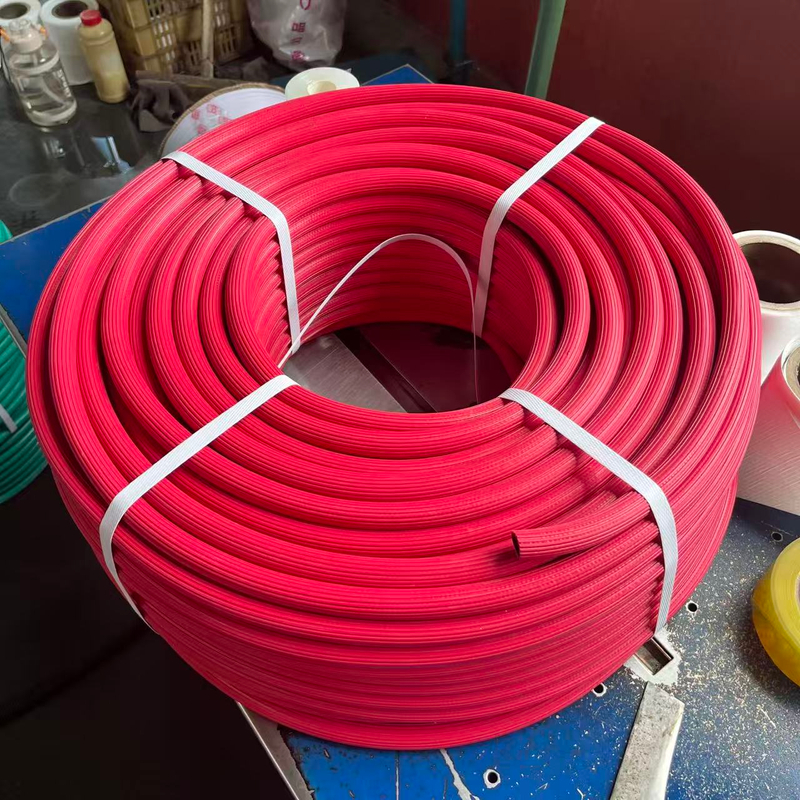
Acetylene hoses are designed to transfer acetylene or other fuel gases approved by the manufacturer. Their construction must maintain gas tightness and withstand the pressure and working conditions specified for the product.
The Honestflex Acetylene Hose also uses a black, smooth synthetic rubber tube and high-strength synthetic cord reinforcement. Its outer cover is available in blue, green, or red, and its listed working temperature is -20°C to +70°C.
These product descriptions show that the two hoses may share similar basic construction. Their key distinction is the gas service for which each product is specified, rather than an assumed difference between rubber compounds.
A hose should only be used for the gas service stated by its manufacturer and product marking. Using an unsuitable hose can lead to leakage, equipment malfunction, or fire hazards.
Before purchasing, check the hose's gas compatibility, working pressure, temperature range, dimensions, fittings, and applicable standard. Do not select a hose based on its appearance alone.

Color coding helps workers distinguish gas lines during installation and operation. In some markets, green is commonly used for oxygen hoses, while red is commonly used for fuel-gas hoses.
However, color conventions are not identical in every country or product system. Some manufacturers offer several cover colors for different customer requirements. Honestflex lists blue, green, and red cover options for both its Oxygen Hose and Acetylene Hose.
Therefore, color should be treated as a visual identification aid, not the only way to identify a hose. Always check the printed markings, gas designation, product documentation, and equipment connections.
Oxygen and fuel-gas hoses must remain clearly distinguishable. OSHA's construction welding and cutting requirements state that the two hose types must be distinguishable by color or surface characteristics. They must not be interchanged.
Clear identification helps reduce connection errors and supports safer operation. Before use, confirm that each hose is connected to the correct regulator, gas supply, and torch inlet.
Oxygen hoses deliver oxygen from cylinders or centralized supply systems to welding and cutting equipment. Common applications include:
Oxy-fuel welding and cutting
Metal fabrication and repair
Brazing and heating operations
Industrial maintenance
Other processes requiring an approved oxygen supply
The hose must be designed for the oxygen service and operating conditions of the equipment.
Acetylene hoses carry fuel gas from cylinders or gas supply systems to welding and cutting torches. Typical applications include:
Oxy-acetylene welding
Flame cutting
Brazing
Metal heating
Repair and fabrication work
Acetylene is used with oxygen to create a high-temperature flame. The hose and its connections must be suitable for acetylene service and the specified operating pressure.
No. Oxygen hoses and acetylene hoses must not be interchanged. Each hose must be used only for the gas service for which it is designed and identified.
Gas-specific fittings and connections also help prevent incorrect connections. Never force a connection or use an adapter to bypass gas identification requirements.
There is no single working pressure that applies to every oxygen hose or acetylene hose. The rated pressure depends on the hose design, size, construction, applicable standard, and manufacturer specifications.
When comparing products, check:
Maximum working pressure
Minimum burst pressure, if specified
Hose inside and outside diameter
Gas compatibility
Fitting and connection requirements
Applicable product standard
Do not assume that oxygen hoses always have a higher working pressure than acetylene hoses. The actual rating must come from the specification for the exact hose model.
Acetylene also has specific system pressure restrictions. For example, OSHA's general-industry rule limits acetylene generation, piping, and use to 15 psig, subject to the stated regulatory exceptions. This is a gas-system safety limit, not a universal hose working-pressure rating.
Temperature limits also vary by hose model and applicable standard. Honestflex lists a working temperature range of -20°C to +70°C for its Oxygen Hose and Acetylene Hose.
For comparison, ISO 3821:2019 specifies a temperature range of -20°C to +60°C for the rubber hoses within its scope. Buyers should check the applicable standard and the manufacturer's product data rather than assuming that all welding hoses share the same temperature range.
Avoid exposing hoses to flames, hot metal, sparks, or environmental conditions beyond their specified limits. Replace hoses that show heat damage or material deterioration.
ISO 3821:2019 specifies requirements for rubber hoses, including twin hoses, used in welding, cutting, and related processes. It covers normal-duty hoses with a maximum working pressure of 2 MPa (20 bar) and certain light-duty hoses.
However, its scope does not cover thermoplastic hoses or hoses used for high-pressure acetylene above 0.15 MPa (1.5 bar). Buyers should confirm that the specific hose and gas service fall within the scope of the standard before requesting compliance.
Honestflex lists ISO 3821 and AS/NZS 1869:1996 Class C as optional requirements on its Oxygen Hose and Acetylene Hose product pages. Confirm the required standard and supporting documents for the exact product before ordering.
Regular inspection helps identify damage before it leads to a gas leak or equipment failure. Recommended checks include:
Inspect the hose before use for cuts, cracks, burns, bulges, and abrasion.
Check fittings and connections for damage or leakage.
Keep oxygen hoses and connections free from oil and grease.
Protect hoses from sharp edges, hot surfaces, sparks, and heavy equipment.
Keep oxygen and fuel-gas hoses clearly identified and separate.
Remove defective or doubtful hoses from service.
OSHA requires relevant welding and cutting hoses to be inspected at the beginning of each working shift. Defective hoses must be removed from service. Follow the regulations that apply to the workplace and the manufacturer's inspection instructions.
Do not carry out improvised pressure tests. Any required testing should follow the applicable regulation, product standard, and manufacturer procedure.
Selecting a suitable welding hose requires more than checking its color or outside appearance. Consider the following factors before placing an order:

Gas type: Confirm whether the hose is intended for oxygen, acetylene, or another approved gas.
Working pressure: Match the hose rating to the equipment and operating requirements.
Temperature range: Check the specified temperature limits for the working environment.
Hose dimensions: Confirm the inside diameter, outside diameter, and required length.
Connections: Check fitting types and compatibility with regulators and torches.
Standards: Confirm the standards and documents required in the destination market.
Working conditions: Consider abrasion, weather exposure, heat, and handling requirements.
For projects that require both oxygen and fuel-gas lines, a twin welding hose may help keep the two lines organized. However, each passage must still be identified and approved for its intended gas.
Review the product specifications carefully and confirm any special requirements with the supplier before ordering.
An oxygen hose carries oxygen to welding or cutting equipment, while an acetylene hose carries acetylene fuel gas. Each hose must be approved and identified for its intended gas service.
No. Green is commonly used for oxygen and red for fuel gas in some markets, but color options and conventions can vary. Always check hose markings and product documentation.
No. Oxygen and acetylene hoses must not be interchanged. Use each hose only for the gas service specified by its manufacturer.
Not necessarily. Pressure ratings depend on the specific hose model, construction, standard, and manufacturer data. Always check the rated working pressure for the exact product.
Inspect hoses before use and follow applicable workplace regulations. OSHA construction requirements call for inspection at the beginning of each working shift. Remove defective or doubtful hoses from service.
Choosing the right welding hose requires careful attention to gas compatibility, working pressure, temperature, and connection requirements.
Honestflex offers oxygen hoses, acetylene hoses, and twin welding hoses for welding, cutting, and related industrial applications.
Contact our team to discuss your hose specifications, application requirements, and product options.
Get in touch with Honestflex to request product information or a quotation.
