


T: +86-19511798062
E: sales@honestflex.com
E: sales@honestflex.com
Licang District, Qingdao, Shandong, China
Views: 0 Author: Site Editor Publish Time: 2026-06-29 Origin: Site


Understanding the dynamics of fluid power is essential for anyone involved in the design, maintenance, or operation of industrial machinery, and at the heart of this discipline lies the critical concept of hydraulic hose pressure. Managing hydraulic hose pressure effectively ensures that systems operate safely, efficiently, and reliably over their intended lifespan. Whether you are dealing with heavy-duty construction equipment, precision agricultural machinery, or complex automated manufacturing lines, the principles governing fluid containment and transmission remain the same. This comprehensive guide explores the multifaceted world of pressure ratings, material science, system compatibility, and industry standards, providing you with the knowledge needed to make informed decisions about your fluid conveyance components.
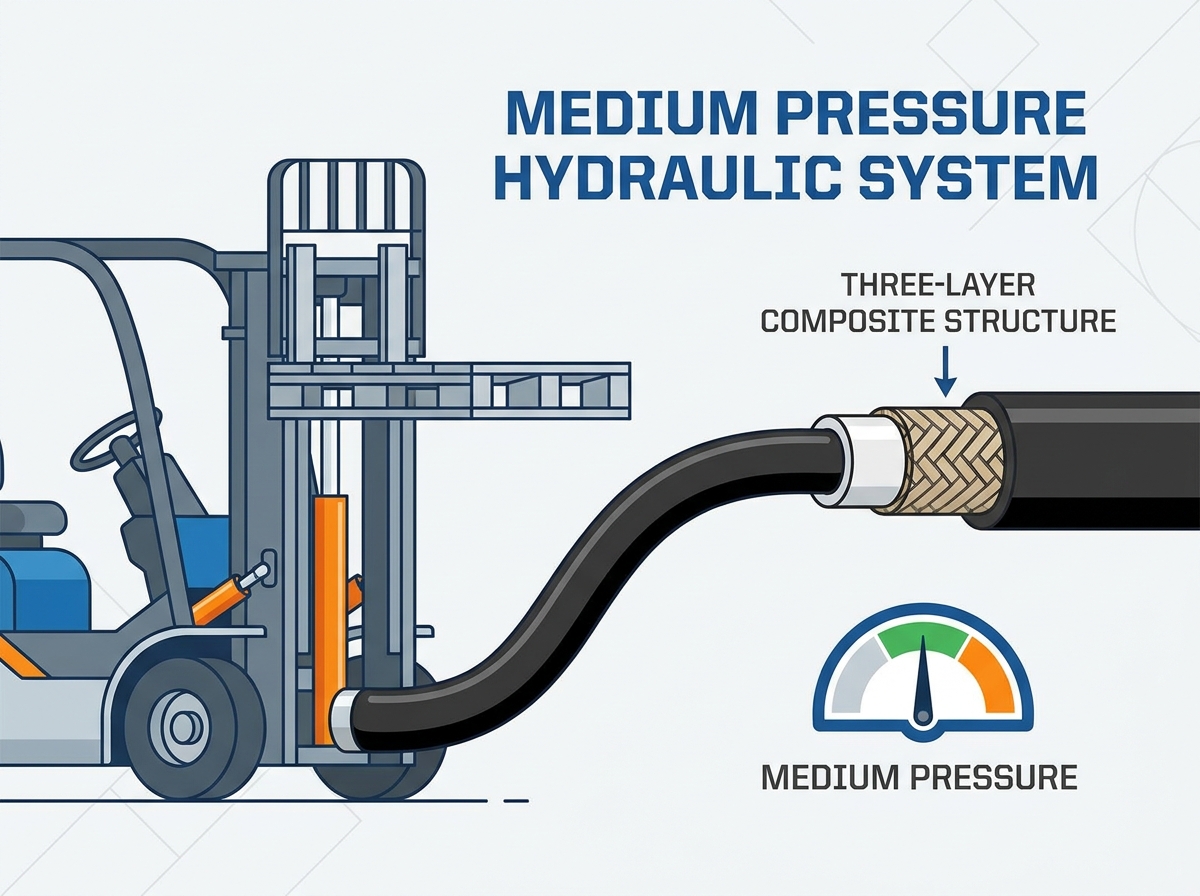
Understanding hydraulic hose pressure is critical for maintaining safe and efficient fluid power systems.
To truly grasp the importance of fluid conveyance, one must first understand how hydraulic hose pressure dictates the behavior of the entire system. Pressure is the force that drives the actuators, cylinders, and motors in a hydraulic circuit. When fluid is pumped through a confined space, it exerts force against the walls of the conduit. The ability of that conduit to withstand this outward force without rupturing, expanding excessively, or degrading over time is the primary measure of its quality and suitability for a given application. Engineers calculate the required pressure based on the load the system must move and the surface area of the actuators. Consequently, the hoses connecting the pump to the valves and the valves to the actuators must be carefully selected to handle not only the steady-state operating pressure but also the transient pressure spikes that occur during rapid valve actuation or sudden load changes.
The relationship between hydraulic hose pressure and system performance is direct and undeniable. If a hose is not rated for the maximum pressure generated by the system, it becomes the weakest link, posing a severe safety hazard and risking catastrophic failure. Conversely, over-specifying a hose can lead to unnecessary costs, increased weight, and reduced flexibility, making installation difficult and potentially putting undue stress on fittings and adjacent components. Therefore, understanding the exact pressure requirements of your system is the first step in selecting the appropriate fluid conveyance solution. This involves analyzing the maximum working pressure, the frequency and magnitude of pressure surges, and the environmental conditions that might affect the hose's structural integrity over time.
In dynamic systems, pressure is rarely constant. The opening and closing of directional control valves, the sudden stopping of a heavy load, or the rapid acceleration of a hydraulic motor can create shock waves within the fluid. These pressure spikes can easily exceed the system's normal operating pressure by a significant margin. A high-quality hose must possess the structural resilience to absorb these shocks without suffering fatigue failure. This is where the concept of a safety factor becomes crucial. The safety factor is the ratio between the hose's minimum burst pressure and its maximum working pressure. A standard safety factor in the industry is 4:1, meaning the hose is designed to burst at a pressure at least four times higher than its rated working pressure, providing a vital buffer against unexpected surges.
When evaluating solutions for medium-pressure applications, the Honestflex SAE100R7/EN855 R7 stands out as a highly engineered component designed to balance strength, flexibility, and weight. This specific model is a medium-pressure Hydraulic Hose that utilizes advanced materials to achieve its performance characteristics. Unlike traditional rubber hoses, which rely on thick layers of synthetic rubber and heavy steel wire reinforcement, this product features a sophisticated three-layer composite structure. This structure is specifically tailored to provide durability and flexibility in demanding environments while significantly reducing the overall weight of the assembly.

The core of the SAE100R7/EN855 R7 is its inner tube, which is constructed from an oil-resistant seamless thermoplastic Polyamide (PA). This seamless construction is critical for maintaining smooth fluid flow, minimizing turbulence, and preventing localized pressure drops. Polyamide is chosen for its excellent chemical resistance, particularly against petroleum-based fluids and synthetic lubricants, ensuring that the inner tube does not degrade, swell, or leach contaminants into the hydraulic system over time. The seamless nature of the tube also eliminates potential weak points where leaks or ruptures could initiate under high pressure.
Surrounding this thermoplastic core is the reinforcement layer, which provides the necessary strength to contain the internal fluid pressure. Instead of heavy steel wire, this hose is reinforced with one or two layers of braided high-tensile synthetic fibre. This choice of material is a game-changer for applications where weight and flexibility are paramount. The synthetic fibre braid offers exceptional tensile strength, allowing the hose to achieve impressive pressure ratings while remaining highly pliable. This flexibility is particularly advantageous in tight engine compartments, complex robotic arms, or any application where the hose must navigate intricate routing paths without kinking or collapsing.
The outermost layer is a cover made from black, abrasion-resistant polyurethane. In industrial and mobile applications, hoses are frequently subjected to harsh external conditions, including friction against other machine components, exposure to abrasive dust and dirt, and potential impacts. The polyurethane cover acts as a robust shield, protecting the inner layers from mechanical damage and environmental degradation. Furthermore, this specific material combination results in a hose that weighs approximately 50% of a comparable rubber hose. This dramatic reduction in weight not only lessens the overall load on the equipment but also significantly reduces installation effort, making it easier for technicians to handle and route the assemblies during manufacturing or maintenance.
To ensure safe and reliable operation, it is essential to match the physical specifications of the hose to the demands of the application. The SAE100R7/EN855 R7 is engineered to perform across a wide range of operating conditions, making it a versatile choice for numerous industries. Understanding its temperature limits, dimensional range, and pressure capabilities is vital for successful integration into any fluid power system.
Temperature plays a critical role in the performance and longevity of thermoplastic materials. The SAE100R7/EN855 R7 boasts an impressive operating temperature range, functioning reliably from -40 degrees Celsius (-104 degrees Fahrenheit) up to +100 degrees Celsius (+212 degrees Fahrenheit). This broad thermal envelope allows the hose to be deployed in extreme environments, from freezing outdoor winter conditions to the high-heat environments typically found near internal combustion engines or heavy industrial machinery. Maintaining structural integrity across this temperature range ensures that the hose will not become brittle and crack in the cold, nor will it soften and lose its pressure-holding capabilities in the heat.
In terms of dimensions, this product line offers significant versatility. The inner diameter ranges from 4.8 mm (3/16 inch) up to 25.4 mm (1 inch). This range accommodates various flow rate requirements, allowing engineers to size the hose correctly to minimize fluid velocity and reduce heat generation within the system. The maximum working pressure is directly tied to the construction and the inner diameter. For the one-layer braided models, the maximum working pressure ranges from 1015 psi to 3045 psi, depending on the specific size. For applications requiring higher pressure containment, the two-layer braided models offer a maximum working pressure ranging from 1520 psi to 3980 psi. Regardless of the specific configuration, all variations adhere to a strict 4:1 safety factor, ensuring a high margin of safety against unexpected pressure surges.
Another unique and highly valuable characteristic of this specific construction is its electrical properties. The combination of the thermoplastic inner tube, synthetic fibre reinforcement, and polyurethane cover means that the hose possesses non-conductive properties. This provides natural electrical insulation, making it an ideal choice for applications where electrical conductivity could pose a safety hazard, such as in utility equipment operating near power lines, or in environments where static electricity buildup must be carefully managed.
The unique combination of medium-pressure capability, lightweight construction, flexibility, and broad chemical compatibility makes the SAE100R7/EN855 R7 suitable for a vast array of applications across multiple industries. Its design is particularly well-suited for medium pressure hydraulic and pneumatic systems where traditional rubber hoses might be too heavy, too bulky, or insufficiently resistant to specific environmental factors.
In the agricultural sector, machinery operates in demanding, often unforgiving environments. This hose is extensively used in agricultural machinery, including tractors, combine harvesters, and irrigation systems. Tractors and harvesters rely on hydraulics for steering, lifting implements, and driving auxiliary motors. The lightweight nature of the thermoplastic hose reduces the overall weight of the machinery, contributing to fuel efficiency and reduced soil compaction. Furthermore, the abrasion-resistant polyurethane cover withstands the harsh conditions of the field, including exposure to dirt, rocks, and crop residue.
Material handling is another industry that benefits greatly from this technology. The hose is highly applicable for material handling equipment such as forklifts, lifting platforms, and stacker cranes. In these applications, hoses are often routed through masts and scissor mechanisms, requiring them to flex repeatedly under pressure. The high-tensile synthetic fibre reinforcement provides the necessary fatigue resistance to endure thousands of flexing cycles without failure, while the tight bend radius allowed by the flexible construction simplifies routing in the confined spaces of lifting mechanisms.
Beyond mobile equipment, the SAE100R7/EN855 R7 is a staple in stationary industrial settings. It is widely used in industrial hydraulics and centralized lubrication systems for machine tools and automated production lines. In these environments, precision and reliability are paramount. The seamless Polyamide inner tube ensures clean fluid delivery, which is critical for the sensitive servo valves and actuators used in automated machinery. Additionally, the non-conductive properties can be beneficial in manufacturing environments with complex electrical systems.
Interestingly, the utility of this hose extends beyond liquid hydraulics. It can also be used for medium-pressure gas transportation, including compressed air and industrial gases. However, when deployed in pneumatic or gaseous systems, specific safety protocols must be followed. It is a strict requirement that pneumatic or gaseous systems require the use of a perforated (pin-pricked) hose. This pin-pricking process creates microscopic holes in the outer polyurethane cover, allowing any gas that permeates through the inner tube to escape safely into the atmosphere, preventing the cover from blistering or blowing off under pressure. Furthermore, when used for gas transportation, selection must be confirmed based on media compatibility to ensure the specific gas does not degrade the Polyamide inner tube.
A hydraulic hose is only as good as its ability to integrate seamlessly with the rest of the system. This involves compatibility with the fluids being conveyed, the fittings used to connect the hose to the components, and the pumps generating the flow and pressure.
Fluid compatibility is a critical factor in hose selection. The SAE100R7/EN855 R7 exhibits broad chemical resistance, making it highly versatile. It is fully compatible with standard petroleum-based hydraulic oils, which are the most common fluids used in the industry. Additionally, it is compatible with synthetic ester oils and water-based hydraulic fluids. For environments where fire safety is a primary concern, such as in mining or certain manufacturing processes, the hose is compatible with HFA/HFB fire-resistant fluids and water-glycol solutions. This extensive compatibility ensures that the hose can be standardized across a fleet of equipment using different fluid types, simplifying inventory and maintenance.
Connecting the hose securely to the system is equally important. This product is compatible with metric, BSP (British Standard Pipe), and JIC (Joint Industry Council) type permanent crimped fittings. This compatibility with globally recognized fitting standards ensures that the hose can be easily integrated into equipment manufactured anywhere in the world. When properly crimped using the correct specifications, these fittings provide a leak-free seal capable of withstanding the full working pressure and safety factor of the hose.
Finally, the hose is suitable for use with high-pressure piston and gear pumps. These pumps are the heart of the hydraulic system, generating the flow and pressure required to perform work. The hose's robust construction ensures it can handle the continuous flow and pressure pulsations generated by these pumps without premature wear or failure.
Adherence to recognized industry standards is the hallmark of a quality hydraulic component. These standards ensure that the product has been rigorously tested and meets specific performance criteria for safety, durability, and reliability. The SAE100R7/EN855 R7 carries several key certifications that validate its engineering and manufacturing quality.
Safety in hazardous environments is paramount, which is why this hose is MSHA (Mine Safety and Health Administration) certified. This certification indicates that the hose cover meets strict requirements for flame resistance, making it safe for use in underground mining operations where the risk of fire must be rigorously mitigated. Furthermore, the product meets or exceeds SAE 100R7 requirements. The Society of Automotive Engineers (SAE) sets the benchmark standards for fluid power components in North America, and meeting the 100R7 specification guarantees that the hose performs to the expected levels for medium-pressure thermoplastic applications. Finally, the hose is manufactured to comply with DIN EN855 R7 standards, ensuring it meets the rigorous quality and performance expectations of the European market. These combined certifications provide global assurance of the product's reliability and safety.
Even the highest quality hydraulic hose will fail prematurely if it is not installed and maintained correctly. Proper routing, secure clamping, and regular inspection are essential for maximizing the lifespan of the assembly and ensuring the safety of the operators and the equipment.
During installation, it is crucial to avoid twisting the hose, as this can severely reduce its pressure-holding capability and lead to early failure. The hose should be routed to allow for natural flexing and movement during operation, without exceeding its minimum bend radius. Proper clamping is also necessary to prevent the hose from rubbing against sharp edges or vibrating excessively, which can wear through the polyurethane cover. Regular maintenance inspections should look for signs of abrasion, blistering, leaks at the fittings, or any stiffening of the hose, which may indicate thermal or chemical degradation. By adhering to these best practices, operators can ensure that their systems maintain optimal pressure and perform reliably day in and day out.
The Honestflex SAE100R7/EN855 R7 stands as a highly efficient, medium-pressure solution that delivers exceptional practical value through its lightweight, three-layer composite design and broad compatibility. By utilizing a seamless Polyamide inner tube and high-tensile synthetic fiber reinforcement, it offers a 50% weight reduction compared to traditional rubber alternatives, significantly easing installation and reducing equipment load. Its non-conductive properties, wide temperature tolerance (-40C to +100C), and robust abrasion-resistant polyurethane cover make it exceptionally suited for diverse, demanding environments, from agricultural and material handling machinery to industrial hydraulics. With comprehensive certifications including MSHA, SAE 100R7, and DIN EN855 R7, alongside compatibility with various fluids and standard fittings, this hose provides a reliable, safe, and versatile fluid conveyance solution for professionals seeking durability without the burden of excess weight.
