


T: +86-19511798062
E: sales@honestflex.com
E: sales@honestflex.com
Licang District, Qingdao, Shandong, China
Views: 0 Author: Site Editor Publish Time: 2026-08-18 Origin: Site


Catastrophic hose failure in high-pressure hydraulic systems introduces severe operational risks. We are talking about immediate safety hazards, environmental fluid loss, and crippling machine downtime. When fluid under extreme pressure breaches a hose wall, the resulting injection injuries or equipment fires are devastating. Selecting the correct heavy-duty hose is a strict engineering requirement. Over-speccing leads to unnecessary weight, excessive rigidity, and routing nightmares through tight machinery joints. Under-speccing guarantees premature failure and massive safety liabilities under high impulse loads.
Navigating the SAE "100R" naming convention often causes confusion on the shop floor. A higher number does not automatically dictate a superior hose for every application. SAE standards are primarily construction-based specifications. They dictate how the hose is built rather than establishing a simple hierarchy. Evaluating SAE 100R12 vs R13 vs R15 spiral hoses requires strict analysis of working pressure, impulse cycles, bend radius, and environmental demands.
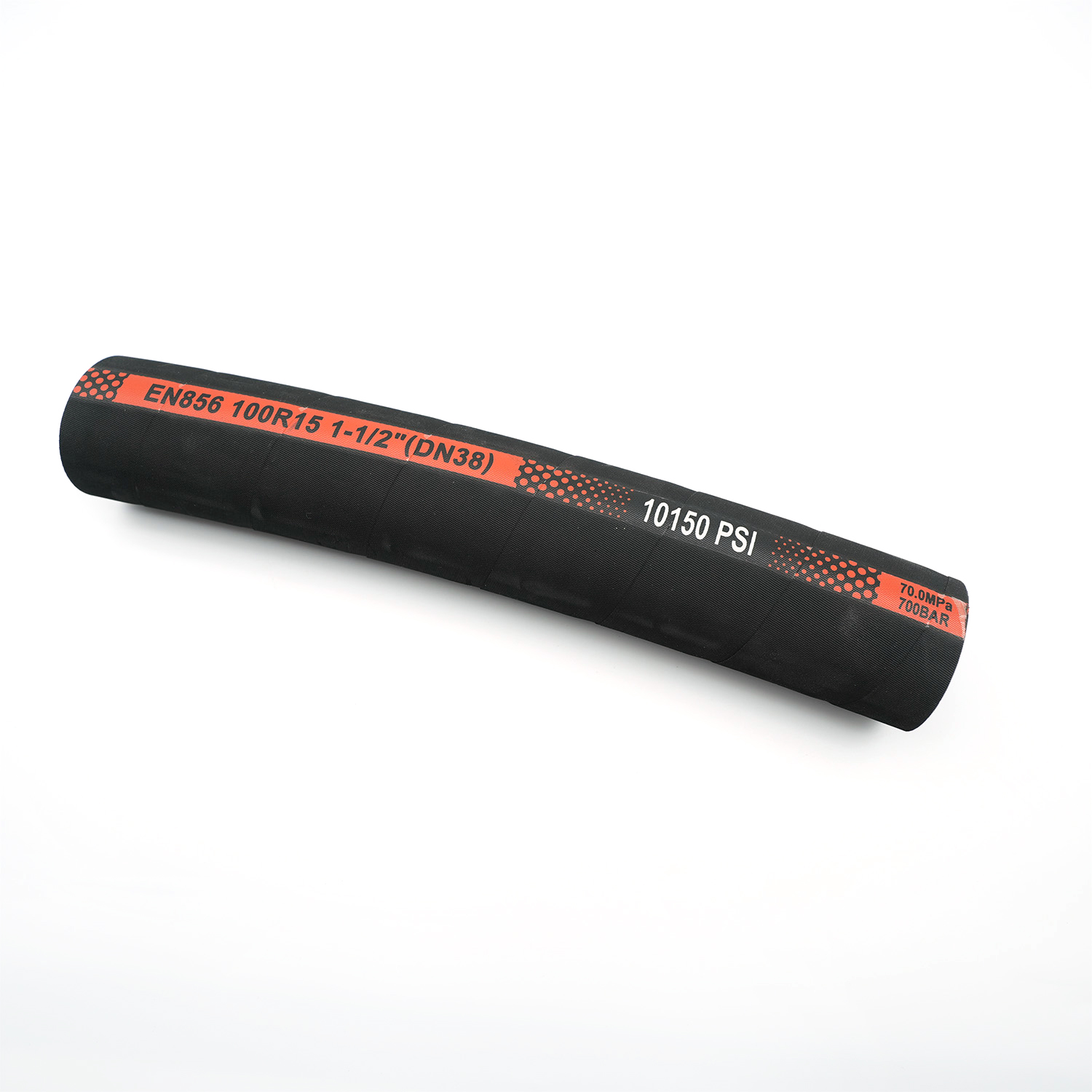
SAE 100R12: Best for standard heavy-duty applications requiring high pressure with a 4-wire spiral construction, offering a baseline of durability and moderate flexibility.
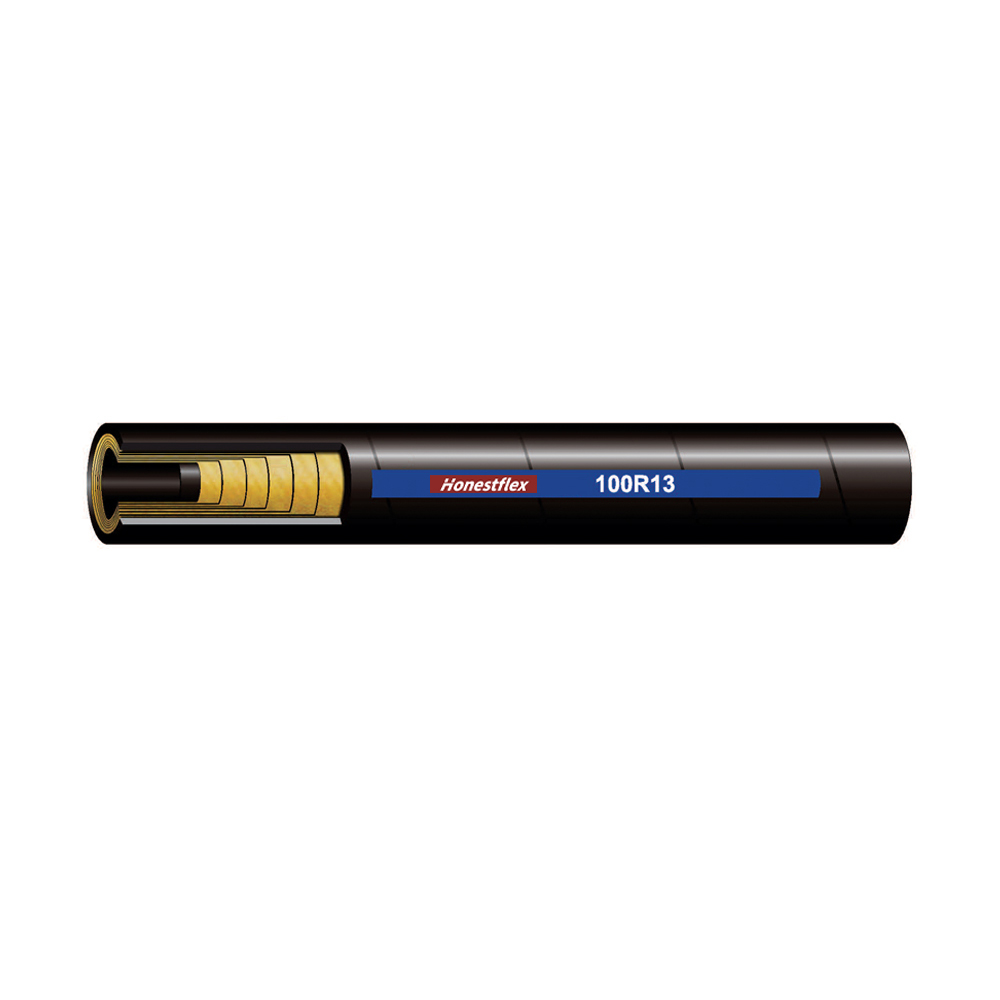
SAE 100R13: Engineered for extreme high-pressure and high-impulse applications, typically utilizing multiple spiral wires (often up to 6 in larger diameters) to withstand severe pressure spikes.
SAE 100R15: The ultra-high-pressure standard, designed for the most demanding environments (e.g., hydrostatic drives, offshore, mining) requiring constant high working pressures and exceptional impulse life.
The Deciding Factor: Selection must balance maximum system pressure (including surge spikes) against the physical constraints of the machinery (bend radius, weight, and routing space).
Table of Contents
Proper hydraulic hose selection relies on the STAMPED framework. This acronym stands for Size, Temperature, Application, Media, Pressure, Ends, and Delivery. In high-pressure hydraulics, Pressure and Application dictate the baseline requirements. You must account for continuous working pressure, maximum surge pressure, internal fluid temperature thresholds, and chemical compatibility with the hydraulic media. Ignoring any single factor within the STAMPED criteria compromises the integrity of the entire hydraulic circuit.
Let us break down how these factors apply in the field. Size determines fluid velocity; an undersized hose generates excessive heat, which bakes the inner rubber tube and leads to cracking. Temperature ratings must account for both the ambient environment and the fluid itself. High-pressure systems often run hot, and exceeding the hose's temperature limit degrades the synthetic rubber compounds rapidly. Pressure is the most demanding variable. You cannot simply look at the machine's standard operating pressure. You must measure the peak surge pressure—the sudden spike that occurs when a cylinder bottoms out or a heavy load shifts abruptly.
High-pressure environments demand specific reinforcement structures. Hydraulic hoses generally utilize either braided or spiral wire construction. Braided hoses feature crisscrossed steel wires, providing excellent flexibility for low to medium-pressure applications. When subjected to high-pressure impulse cycles—rapid spikes and drops in system pressure—the crisscrossed wires in a braided hose rub against each other. This friction causes wire fatigue, eventually leading to a blowout.
Spiral hoses eliminate this friction entirely. The high-tensile steel wires are wrapped in parallel layers, separated by thin layers of synthetic rubber. Because the wires do not intersect, they do not create friction under pressure surges. This layered construction makes spiral hoses mandatory for high-impulse, high-pressure environments. Standards like R12, R13, and R15 exclusively utilize spiral construction to achieve their required impulse life and pressure ratings.
Construction Comparison: Braided vs. Spiral
Feature | Braided Construction | Spiral Construction (R12, R13, R15) |
|---|---|---|
Wire Layout | Crisscrossed, overlapping wires | Parallel wires in alternating layers |
Friction Under Pressure | High internal wire friction | Zero internal wire friction |
Impulse Life | Low to moderate | Extremely high (up to 1,000,000 cycles) |
Flexibility | High flexibility, tight bend radius | Stiff, requires larger bend radius |
Ideal Application | Medium pressure, static lines | High pressure, severe impulse surges |
The SAE 100R12 specification defines a heavy-duty hose built with a 4-wire alternating spiral steel construction. The alternating wrap—where one layer spirals clockwise and the next counterclockwise—provides structural stability and prevents the hose from twisting under pressure. R12 hoses typically support working pressures up to 4,000 PSI, depending on the inner diameter (ID), and handle operating temperatures up to 250°F (121°C). They offer a solid baseline of durability while maintaining a moderate degree of flexibility compared to heavier spiral hoses.
R12 hoses excel in standard earthmoving equipment, general heavy-duty industrial machinery, and agricultural implements. If a machine requires reliable high-pressure fluid transfer without extreme, continuous pressure spikes, R12 provides an excellent balance of performance and routing ease. Mechanics often prefer R12 when working within articulated joints where the hose must bend repeatedly without kinking. You will frequently see R12 deployed on the boom arms of standard wheel loaders, skid steers, and mid-sized excavators.
Despite its versatility, R12 has distinct limitations. It falls short in environments characterized by extreme pressure spikes or continuous ultra-high-pressure demands. When a system frequently surges past the 4,000 PSI threshold, the 4-wire construction experiences accelerated fatigue. Subjecting an R12 hose to impulse cycles beyond its tested capacity drastically reduces its service life, risking sudden rupture.
Field inspection for R12 hoses should focus on specific wear patterns:
Check the outer cover for abrasion near clamping points, as the moderate flexibility can lead to shifting during operation.
Inspect the crimp base for weeping fluid, indicating the 4-wire pack is beginning to separate from the fitting under pressure.
Look for localized bulging along the hose length, which signals internal wire fatigue from unrecorded pressure spikes.
When system demands exceed the capabilities of R12, the SAE 100R13 standard provides the necessary upgrade. R13 introduces a heavier construction, utilizing multiple spiral wires. While smaller IDs may use 4 wires, larger R13 hoses (typically 1 inch and above) incorporate 6 layers of high-tensile steel wire. This robust construction allows R13 to maintain a constant working pressure of 5,000 PSI across most sizes, heavily outperforming R12 in high-impulse resistance. R13 hoses undergo rigorous testing, surviving 500,000 impulse cycles under severe pressure spikes on standardized test benches.
This specification excels in heavy construction machinery, large-scale agricultural equipment, offshore drilling rigs, and systems experiencing severe, repetitive pressure surges. Excavators, rock crushers, and heavy lifting equipment rely on R13 to manage the intense hydraulic shocks generated during heavy load manipulation. When a 50-ton excavator strikes bedrock, the hydraulic fluid sends a massive shockwave back through the lines. The added wire layers in an R13 hose absorb these shocks, preventing the hose wall from expanding and rupturing.
The transition to R13 involves unavoidable physical trade-offs. The additional steel reinforcement increases the overall weight of the hose and expands its outer diameter (OD). More critically, R13 exhibits reduced flexibility. The minimum bend radius is significantly larger than that of an equivalent R12 hose. Forcing an R13 hose into a tight bend stresses the outer wire layers, compromising the hose's structural integrity before the system is even pressurized. Mechanics must plan routing paths carefully, often utilizing angled fittings to avoid bending the hose directly out of the port.
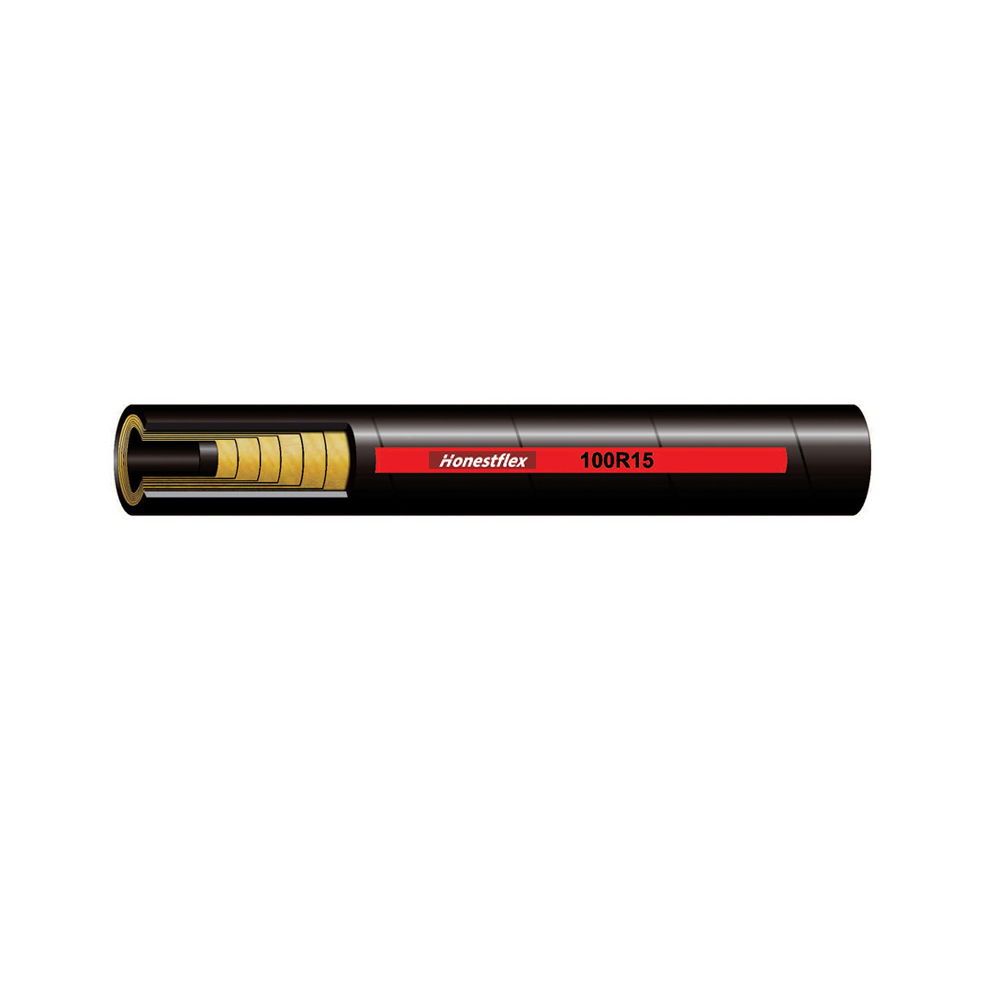
SAE 100R15 represents the ultra-high-pressure standard in spiral hose construction. It is engineered for environments where failure is absolutely not an option. R15 hoses typically feature a 6-wire spiral construction across almost all sizes. The defining characteristic of R15 is its ability to maintain a constant working pressure of 6,000 PSI regardless of the hose's inner diameter. This constant pressure rating sets it apart from lower standards where pressure capacity drops as the hose size increases. R15 is tested to withstand upwards of 1,000,000 impulse cycles, offering exceptional longevity in punishing environments.
Extreme-duty applications demand R15. Hydrostatic transmissions, deep-hole drilling rigs, offshore blowout preventers, and heavy mining equipment rely on this standard. In these applications, hydraulic systems operate continuously at maximum pressure. Hydrostatic drives, for instance, require constant high pressure and bidirectional fluid flow, generating massive amounts of heat and mechanical stress. The 6-wire construction prevents hose expansion and fatigue, ensuring consistent fluid delivery and machine operation under the most hostile conditions imaginable.
Deploying R15 comes with significant implementation challenges. The extreme stiffness of the 6-wire construction makes installation exceedingly difficult, especially in tight spaces or complex routing paths. The heavy physical footprint requires specialized routing clamps to manage vibration. Furthermore, R15 absolutely requires specialized, heavily engineered fittings. Standard crimp fittings will blow off under 6,000 PSI. R15 demands bite-the-wire (interlock) fittings that grip the steel reinforcement directly. This requires specialized preparation equipment on the shop floor to strip the hose down to the bare metal before crimping.
Comparing these three standards requires analyzing how their physical features translate into operational outcomes. The layer count directly impacts impulse life and machine uptime. R12's 4-wire design handles standard high pressure, but R13 and R15's transition to 6-wire construction absorbs extreme hydraulic shockwaves. When a valve closes suddenly, the resulting pressure spike travels through the fluid. The heavier wire packs in R13 and R15 contain this spike without micro-fracturing the steel, extending the service life of the hose and keeping the machine operational.
Flexibility shares an inverse relationship with pressure rating and wire count. Choosing R15 over R12 drastically impacts physical routing. Articulated machinery joints require hoses to flex continuously. If an R15 hose is installed where an R12 hose belongs, the stiffness of the R15 hose will restrict movement, transfer mechanical stress to the hydraulic bulkheads, and potentially snap the fittings off the cylinders. You must match the hose's minimum bend radius to the machine's physical movement arc. A hose bent past its minimum radius will flatten, restricting flow and creating a weak point in the wire reinforcement.
The physical footprint—weight and outer diameter—also dictates fitting compatibility. Thicker hoses require specific routing clamps to prevent abrasion against the machine chassis. Furthermore, R13 and R15 require matched, interlock fittings. These fittings bite through the rubber cover and directly into the steel wire, preventing the fitting from blowing off under extreme pressure. Standard friction-fit crimps used on lower-rated hoses will fail catastrophically if applied to R13 or R15.
Technical Comparison of Spiral Hydraulic Hoses
Specification | Wire Construction | Typical Max Working Pressure | Tested Impulse Cycles | Flexibility / Bend Radius | Fitting Requirement |
|---|---|---|---|---|---|
SAE 100R12 | 4-Wire Spiral | Up to 4,000 PSI (varies by ID) | 500,000 cycles | Moderate / Standard | Standard Crimp |
SAE 100R13 | 4 to 6-Wire Spiral | Constant 5,000 PSI | 500,000 cycles (severe spikes) | Stiff / Large Bend Radius | Interlock / Skive |
SAE 100R15 | 6-Wire Spiral | Constant 6,000 PSI | 1,000,000 cycles | Extremely Stiff / Very Large | Interlock / Skive |
Evaluating the higher upfront investment of R13 and R15 against R12 requires analyzing service life trade-offs. Installing an R12 hose in a system that generates 5,000 PSI spikes guarantees premature rupture. The financial impact of replacing blown R12 hoses, cleaning up hazardous fluid spills, and suffering through unplanned machine downtime far exceeds the initial investment of a properly specced R13 or R15 hose. Matching the exact pressure and impulse requirements ensures the hose reaches its maximum intended service life.
Quality control and traceability are non-negotiable at these pressure tiers. Failures at 5,000 or 6,000 PSI are explosive. Sourcing must focus on manufacturers that provide rigorous finished product inspection and batch testing. Traceability codes printed on the layline of the hose allow operators to track the exact manufacturing batch. If a defect is identified, traceability ensures all affected hoses can be pulled from service before a blowout occurs. You should always verify that the layline clearly states the SAE specification, the working pressure, the date of manufacture, and the manufacturer's identification code.
Navigating global standards helps buyers make accurate cross-references. While SAE standards dictate physical construction (how the hose is built), European (EN) and International (ISO) standards often focus on performance metrics. For example, ISO 3862 classifies hoses based on their performance under specific pressures regardless of exact wire count. Understanding how SAE 100R12, R13, and R15 map to ISO equivalents ensures you source the correct specification when maintaining globally manufactured equipment. An ISO 3862 Type R13 hose will meet the performance requirements of an SAE 100R13 hose, allowing for safe substitution in the field.
Improper crimp specifications represent the highest risk during installation. Mixing and matching hoses and fittings from different manufacturers creates a deadly hazard. A fitting designed by Manufacturer A may not properly compress the wire pack of Manufacturer B's hose, even if both meet the SAE 100R13 standard. R12, R13, and R15 require exact, manufacturer-specified crimp diameters. Mechanics must use calibrated calipers or micrometers to verify the final crimp diameter against the manufacturer's published crimp charts.
R13 and R15 often require skiving. This is the process of removing the outer rubber cover, and sometimes the inner liner, to allow the interlock fitting to grip the bare steel wire. Failing to skive a hose when required guarantees a fitting blowout. The skiving tool must be set to the exact depth and length specified by the fitting manufacturer. If you cut too deep, you damage the wire reinforcement. If you cut too shallow, the fitting will not seat properly.
Routing errors in high-vibration environments cause rapid failure. The inherent stiffness of R13 and R15 means they do not absorb vibration well. If a stiff hose is routed too tightly between two vibrating components, the mechanical stress transfers directly to the crimp joint. This causes stress fractures in the steel wire right at the base of the fitting.
Follow these mitigation strategies during installation:
Calculate proper hose length allowances, adding 2% to 4% to the overall length to accommodate contraction under pressure.
Strictly adhere to minimum bend radius guidelines published on the hose layline.
Utilize heavy-duty, rubber-lined routing clamps to isolate vibration and support the heavy hose weight.
Install abrasion sleeves over hoses routed near sharp chassis edges or moving tracks.
Use angled fittings (45-degree or 90-degree) at the port to prevent the hose from bending immediately out of the crimp shell.
The choice between SAE 100R12, R13, and R15 is a strict engineering decision dictated by the STAMPED criteria. It relies entirely on system pressure, impulse severity, and spatial constraints. Treating these standards as a simple hierarchy leads to dangerous under-speccing or expensive, physically restrictive over-speccing. You must match the physical construction of the hose to the exact mechanical demands of the machinery.
Audit your system's peak pressure, paying close attention to surge spikes recorded during heavy operation.
Measure the physical routing space on the machine to determine the maximum allowable bend radius.
Consult your OEM machinery guidelines to verify fitting compatibility and skiving requirements.
Contact a certified hydraulics specialist to ensure your selected hose and fitting combination matches your exact operational demands.
For high-pressure hydraulic applications, working with an experienced hose supplier can help ensure that pressure ratings, reinforcement structures, fittings, and installation requirements are properly matched to actual operating conditions. Qingdao Honest Rubber Co., Ltd, operating under the Honestflex brand, is a professional manufacturer and exporter of hydraulic hoses, industrial hoses, PVC hoses, hose couplings, and hose protection products, supported by a 20,000-square-meter workshop, 108 sets of production and testing equipment, and an experienced technical team serving customers worldwide
A: The "100R" is a naming convention established by the Society of Automotive Engineers (SAE). It classifies hydraulic hoses based on their physical construction, materials, and reinforcement layers rather than just their performance capabilities. It standardizes how hoses are built across the industry.
A: Braided hoses use crisscrossed wires, which offer flexibility but create internal friction under pressure spikes. Spiral hoses use parallel layers of wire separated by rubber. This prevents wire friction, giving spiral hoses a significantly longer impulse life in high-pressure, high-surge environments.
A: No. Mixing fittings across different pressure standards is extremely dangerous. R13 hoses operate at higher pressures and require specialized bite-the-wire (interlock) fittings to grip the heavy steel reinforcement. Using an R12 friction-fit crimp on an R13 hose will likely result in a catastrophic blowout.
A: Not necessarily. While higher-rated hoses resist pressure better, they are much stiffer. If you install an overly stiff hose in an application requiring tight bends, you will exceed its minimum bend radius. This stresses the steel wires and causes premature failure regardless of the pressure rating.
A: Impulse life refers to the number of rapid pressure spikes a hose can withstand before the internal wire reinforcement fatigues and fails. High-impulse hoses like R13 and R15 are designed to survive hundreds of thousands of these violent pressure surges without rupturing.
