


T: +86-19511798062
E: sales@honestflex.com
E: sales@honestflex.com
Licang District, Qingdao, Shandong, China
Views: 0 Author: Site Editor Publish Time: 2026-10-30 Origin: Site


Choosing the right hydraulic hose requires more than checking its pressure rating. Hose construction, minimum bend radius, dimensions, and fluid compatibility also affect system performance.
EN 857 1SC, EN 857 2SC, and EN 853 2SN are three common steel wire braided hydraulic hose types. They differ in reinforcement layers and construction design, which influence their pressure capacity and installation requirements.
This guide compares their construction, pressure ratings, flexibility, and applications to help you select the right hydraulic hose for your equipment.
Table of Contents
The main difference between these three hoses is their steel wire reinforcement and overall construction.
Feature | EN 857 1SC | EN 857 2SC | EN 853 2SN |
|---|---|---|---|
Reinforcement | One steel wire braid | Two steel wire braids | Two steel wire braids |
Construction | Compact | Compact | Conventional |
Inner tube | Oil-resistant synthetic rubber | Oil-resistant synthetic rubber | Oil-resistant synthetic rubber |
Outer cover | Oil- and weather-resistant synthetic rubber | Oil- and weather-resistant synthetic rubber | Oil-, corrosion-, and abrasion-resistant synthetic rubber |
Temperature range | -40°C to +100°C | -40°C to +100°C | Confirm the applicable product specification |
Main feature | Single-braid compact design | Compact, double-braid construction | Standard double-braid construction |
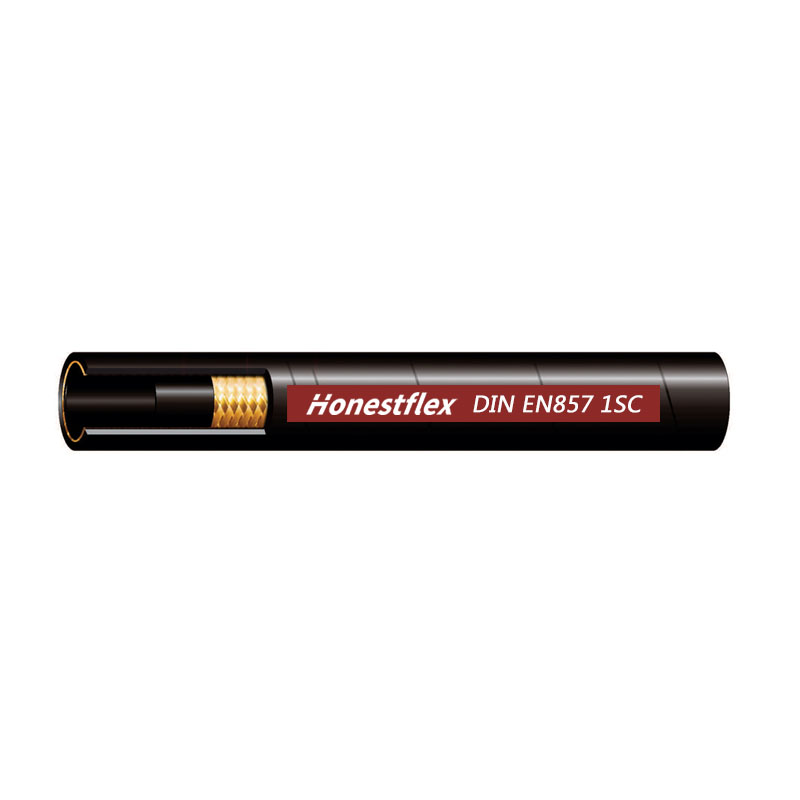
EN 857 1SC hydraulic hose uses one layer of high-tensile steel wire braid. Its compact construction provides pressure resistance while supporting flexible installation.
The inner tube is made of oil-resistant synthetic rubber. The outer cover uses oil- and weather-resistant synthetic rubber.
This hose is suitable for hydraulic circuits that need a compact hose with a single wire braid. Its minimum bend radius and working pressure depend on the hose size.
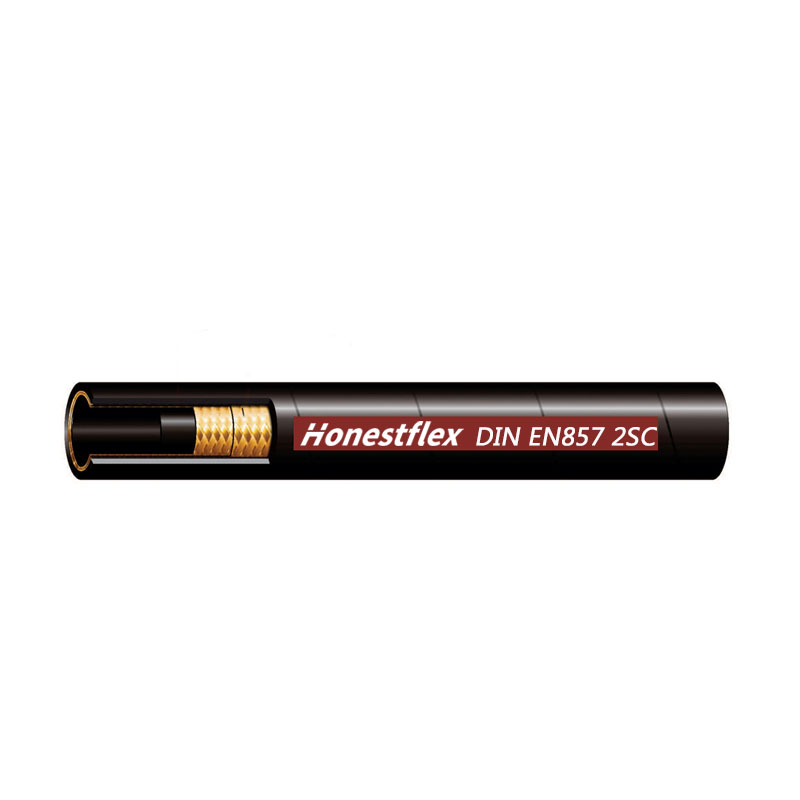
EN 857 2SC uses two layers of high-tensile steel wire braid. It provides higher working pressure than EN 857 1SC at comparable sizes in the Honestflex product range.
Its compact design also helps reduce installation space. This makes it useful for mobile machinery and hydraulic systems with limited routing clearance.
The inner tube uses oil-resistant synthetic rubber, while the outer cover provides oil and weather resistance. The listed operating temperature range is -40°C to +100°C.
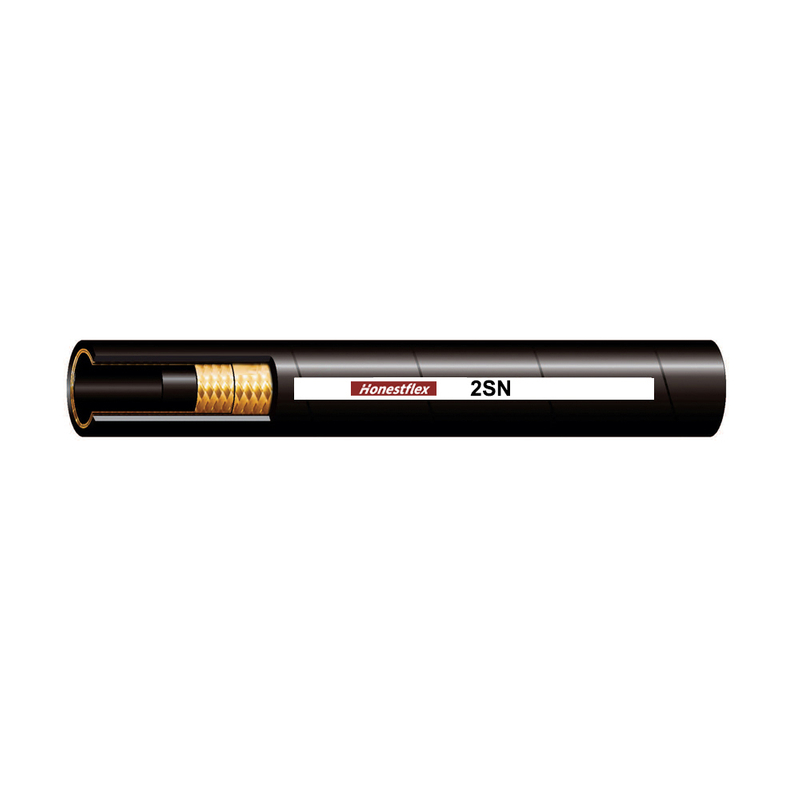
EN 853 2SN also uses two layers of high-tensile steel wire braid. Its construction differs from the compact EN 857 2SC design.
The hose has an oil-resistant synthetic rubber tube and an outer cover designed to resist oil, corrosion, and abrasion.
EN 853 2SN is used in general industrial and mobile hydraulic systems. Its working pressure and minimum bend radius vary with the nominal hose size.
Working pressure is one of the most important factors in hydraulic hose selection. It refers to the maximum pressure a hose is designed to handle during operation.
The pressure rating changes with the hose's inner diameter. A smaller hose may have a higher working pressure than a larger hose of the same type.
The following table compares the published Honestflex specifications for the three hose types.
Hose Size | EN 857 1SC | EN 857 2SC | EN 853 2SN |
|---|---|---|---|
1/4" | 22.5 MPa | 40 MPa | 40 MPa |
5/16" | 21.5 MPa | 35 MPa | 35 MPa |
3/8" | 18 MPa | 33 MPa | 33 MPa |
1/2" | 16 MPa | 27.5 MPa | 27.5 MPa |
5/8" | 13 MPa | 25 MPa | 25 MPa |
3/4" | 10.5 MPa | 21.5 MPa | 21.5 MPa |
1" | 8.8 MPa | 16.5 MPa | 16.5 MPa |
Source: Honestflex product specification tables. Values are maximum working pressures and should be checked against the current product data before selection.
The comparison shows that EN 857 2SC and EN 853 2SN have the same listed working pressure at the matching sizes shown. EN 857 1SC has lower working pressure at these sizes.
This means buyers should not assume that EN 853 2SN always has a higher pressure rating than EN 857 2SC. The actual product specifications matter more than the hose designation alone.
These three pressure terms describe different test or operating conditions:
Working pressure: The maximum pressure specified for normal hose operation.
Proof pressure: A test pressure used to check whether a hose can withstand a specified pressure without leakage or damage.
Burst pressure: The pressure at which a hose fails during a destructive pressure test.
Do not use burst pressure as the allowable operating pressure. Always select a hose based on its rated working pressure and the requirements of the hydraulic system.
The minimum bend radius indicates how tightly a hose can bend without exceeding its specified installation limit.
A smaller minimum bend radius allows tighter routing. This is important in compact machinery and systems with limited installation space.
The table below compares the published minimum bend radius values at matching hose sizes.
Hose Size | EN 857 1SC | EN 857 2SC | EN 853 2SN |
|---|---|---|---|
1/4" | 75 mm | 75 mm | 100 mm |
5/16" | 85 mm | 85 mm | 115 mm |
3/8" | 90 mm | 90 mm | 130 mm |
1/2" | 130 mm | 130 mm | 180 mm |
5/8" | 150 mm | 170 mm | 200 mm |
3/4" | 180 mm | 200 mm | 240 mm |
1" | 230 mm | 250 mm | 300 mm |
Values are taken from the Honestflex product specification tables.
At the listed matching sizes, EN 857 1SC and 2SC have the same minimum bend radius for the first four sizes. The difference appears in some larger sizes.
EN 853 2SN has a larger listed minimum bend radius than the other two types at the matching sizes shown. Therefore, it may require more installation space.
Installing a hose below its specified minimum bend radius can damage its reinforcement and reduce service reliability.
A suitable bend radius helps:
Prevent excessive bending during installation.
Reduce stress near hose fittings.
Support proper hose routing around machine components.
Avoid kinking and deformation.
Always follow the manufacturer's minimum bend radius. Do not force a hose into a tighter installation path.
The inner tube must be compatible with the hydraulic fluid used in the system. An unsuitable fluid can cause rubber swelling, hardening, or other forms of material degradation.
Honestflex lists petroleum-based and water-based hydraulic fluids for its EN 857 1SC and 2SC products. Its EN 853 2SN product page also describes compatibility with petroleum-based and water-based fluids.
However, compatibility depends on the exact fluid formulation, concentration, and operating temperature. Buyers should confirm suitability before ordering.
Honestflex lists an operating temperature range of -40°C to +100°C for its EN 857 1SC and 2SC hoses.
For EN 853 2SN, check the applicable product documentation and confirm the temperature range with the supplier before selection.
Temperature affects rubber flexibility and fluid performance. Both the ambient temperature and the hydraulic fluid temperature should be considered.
The right hose depends on the equipment's pressure requirements, installation space, and operating conditions.
EN 857 1SC is suitable for hydraulic systems that require a single steel wire braid and a compact hose design.
Potential applications include:
Agricultural machinery
Forklifts and material handling equipment
Compact construction machinery
Industrial hydraulic equipment
Check the pressure rating and bend radius for the selected hose size before installation.
EN 857 2SC combines two steel wire braids with a compact construction. It is suitable for high-pressure hydraulic circuits where installation space is limited.
Typical applications include:
Excavators and loaders
Construction machinery
Forklifts and lifting equipment
Mobile hydraulic systems
Industrial machinery
Its compact construction can help with hose routing in equipment with limited clearance.
EN 853 2SN is a double-braided hydraulic hose for general industrial and mobile hydraulic applications.
Typical applications include:
Industrial hydraulic systems
Construction equipment
Agricultural machinery
Material handling equipment
General-purpose high-pressure hydraulic lines
Its minimum bend radius should be checked carefully when the installation space is restricted.
Before choosing a hose, review the system requirements rather than relying only on the standard number.
Identify the maximum operating pressure of the hydraulic system, including pressure fluctuations and potential surges.
Select a hose whose rated working pressure meets the system requirements. Do not use burst pressure as the selection rating.
Measure the available routing space and compare it with the hose's minimum bend radius and outside diameter.
For compact installations, EN 857 1SC or 2SC may be suitable options. EN 853 2SN may require more bending space at matching sizes.
Check the hydraulic fluid type and operating temperature. Confirm compatibility with the hose's inner tube and cover materials.
Do not assume that all synthetic rubber hoses are suitable for every water-based or petroleum-based fluid.
Confirm the nominal size, inner diameter, outside diameter, working pressure, and fitting connection.
The hose and fittings must be compatible with each other and with the hydraulic equipment. Incorrect assembly can lead to leakage or hose failure.
Selection Factor | EN 857 1SC | EN 857 2SC | EN 853 2SN |
|---|---|---|---|
Reinforcement | Single braid | Double braid | Double braid |
Construction | Compact | Compact | Conventional |
Pressure capacity | Lower at matching sizes in the listed range | Higher than 1SC at matching sizes | Same as 2SC at the matching sizes shown |
Bend radius | Smaller than 2SN at listed matching sizes | Smaller than 2SN at listed matching sizes | Larger at listed matching sizes |
Main consideration | Single-braid construction | Compact, high-pressure construction | Conventional double-braid construction |
There is no single best hose for every hydraulic system. The right choice depends on pressure, dimensions, routing space, fluid compatibility, and fitting requirements.
EN 857 1SC, EN 857 2SC, and EN 853 2SN all use steel wire braid reinforcement, but their construction differs.
EN 857 1SC uses one steel wire braid and offers a compact single-braid design. EN 857 2SC uses two steel wire braids in a compact construction. EN 853 2SN also uses two steel wire braids but follows a conventional construction.
For an accurate selection, compare the working pressure, minimum bend radius, hose dimensions, and fluid compatibility at the required size.
Honestflex supplies hydraulic hose products for different industrial and mobile equipment requirements. Contact the team to discuss your required hose type, size, pressure rating, and connection details.
EN 857 1SC has one layer of steel wire braid, while EN 857 2SC has two layers. The 2SC product offers higher working pressure at comparable sizes in the Honestflex specification tables.
Not necessarily. Both use two layers of steel wire braid. In the Honestflex product tables, their listed working pressures are the same at the matching sizes shown. Their construction and minimum bend radius differ.
It depends on the hose size. In the published Honestflex tables, 1SC and 2SC have the same minimum bend radius at several smaller sizes. EN 853 2SN has a larger listed bend radius at the matching sizes shown.
Honestflex lists water-based hydraulic fluids among the applications for these products. However, compatibility depends on the exact fluid formulation and operating conditions. Confirm suitability with the supplier before use.
Check the system's working pressure, required flow, hose inner diameter, minimum bend radius, fluid type, temperature, and fitting connections. Compare the complete product specifications before ordering.
