


T: +86-19511798062
E: sales@honestflex.com
E: sales@honestflex.com
Licang District, Qingdao, Shandong, China



loading


| Availability: | |
|---|---|
| Quantity: | |
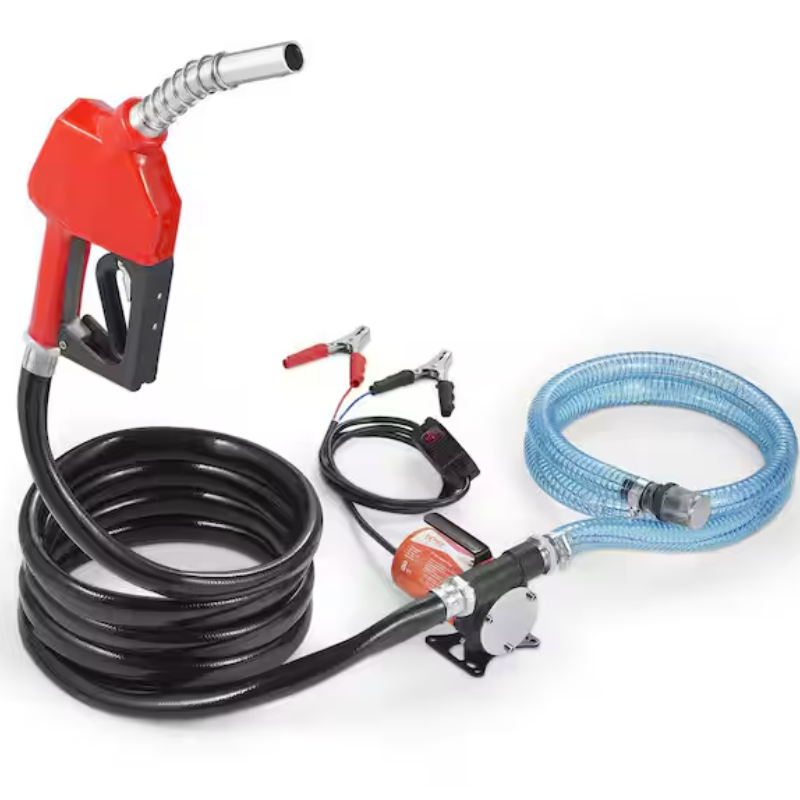
The Fuel Dispenser Hose is a specialized rubber hose designed for gas stations, oil depots, and various fuel delivery equipment. It combines oil resistance, flexibility, and safety to ensure efficient and reliable transport of petroleum products such as gasoline, diesel, and biofuels. The hose features a multi-layered composite structure: the inner layer is made of black NBR (nitrile butadiene rubber) extruded from rubber. Nitrile butadiene rubber is known for its excellent resistance to fuel swelling, providing long-term protection against the erosion of aromatic hydrocarbons in gasoline and diesel, maintaining a smooth inner wall without peeling. The reinforcing layer uses a high-tensile-strength synthetic fiber braided structure, providing stable pressure resistance while ensuring the hose is not easily kinked under frequent bending and dragging. The outer layer is also made of black NBR rubber, formed into a smooth and dense protective layer through extrusion, giving the hose excellent wear resistance, ozone resistance, and aging resistance. The smooth surface reduces resistance during winding and unwinding, extending its service life. To address the electrostatic safety requirements of refueling operations, the hose can be equipped with an internal conductive copper wire or a conductive rubber layer to effectively dissipate static charges generated during transport, preventing the accumulation of static electricity and potential safety hazards. Operating temperature range covers -30°C to +80°C, with some cold-resistant models extending to -40°C to +100°C, adapting to outdoor refueling operations in diverse global climates.
Gas Station Fuel Dispenser Connection: Suitable for fuel dispensing pipelines in various commercial gas stations and CNG stations, connecting the fuel dispenser and nozzle for refueling cars, motorcycles, and other vehicles with gasoline and diesel fuel.
Tank Truck Unloading Operations: Used in tank truck bottom loading and unloading systems, connecting tank trucks to underground storage tanks for rapid and safe fuel transfer.
Mobile Refueling Equipment: Suitable for mobile refueling units in construction sites, mines, farms, etc., for on-site refueling of construction machinery, agricultural machinery, generator sets, and other equipment.
Industrial Fuel Transportation: Used for pipeline connections between fuel storage areas and fuel-consuming equipment in factories and warehouses, such as boiler fuel transportation and diesel generator set fuel supply pipelines.
Ship and Dock Refueling: Suitable for refueling operations on inland waterway vessels and offshore vessels, as well as oil pipelines in dock loading and unloading facilities.
Engine Fuel Systems: Can be used for low-pressure fuel lines, return lines, and drain lines of various internal combustion engines, including truck, bus, off-road vehicle, and stationary engines.
Superior Fuel Resistance: The inner layer uses NBR rubber with high acrylonitrile content, exhibiting excellent resistance to gasoline, diesel, biodiesel, and alcohol-containing fuels, effectively preventing swelling, softening, and aging of the medium.
Reliable Static Electricity Safety Design: Can be equipped with built-in conductive copper wire or a conductive rubber layer to ensure the overall static electricity conductivity of the hose meets international standards, promptly dissipating static charges generated by fuel flow and eliminating the risk of electrostatic sparks.
Excellent Flexibility and Knot Resistance: The synthetic fiber braided reinforcement structure gives the hose excellent flexibility, a small bending radius, and is less prone to kinking and tangling during frequent deployment and towing, improving refueling efficiency.
Smooth Outer Layer with Low Resistance: The outer layer is made of smooth NBR rubber with a low coefficient of friction, ensuring smooth winding and unwinding on the fuel dispenser reel, reducing operating resistance and extending hose life.
Wear-Resistant and Weather-Resistant with Long Lifespan: The outer rubber layer possesses excellent wear resistance and resistance to ultraviolet rays and ozone, capable of withstanding outdoor sun and rain, as well as ground friction, and is not prone to cracking or aging over long-term use.
Wide Temperature Range Adaptability: The operating temperature range covers -30°C to +80°C, meeting the needs of outdoor refueling in cold regions during winter and high-temperature conditions in hot summers. Some models are cold-resistant up to -40°C.
The Fuel Dispenser Hose is available in various sizes and specifications to meet different requirements. Here are some key dimensions and pressure ratings:
I.D. | O.D. | W.P. | B.P. | Bending Radius | Weight | |||
inch | mm | mm | bar | psi | bar | psi | mm | kg/m |
5/8" | 15.9 | 25.4 | 18 | 258 | 72 | 1032 | 160 | 0.59 |
3/4" | 19.1 | 28.7 | 18 | 258 | 72 | 1032 | 190 | 0.67 |
1" | 25.4 | 35.1 | 18 | 258 | 72 | 1032 | 240 | 0.89 |
Q1: What types of fuel can this Fuel Dispenser Hose handle?
This hose is specifically designed for conveying petroleum-based fuels including gasoline, diesel, kerosene, and ethanol-blended fuels (typically up to E85 or E100 depending on specification). It is not suitable for water, chemicals, or high-aromatic content fuels without confirmation.
Q2: What is the working temperature range of the hose?
The fuel dispenser hose operates effectively within a temperature range of approximately -40°C (-104°F) to +121°C (+250°F), maintaining flexibility and safety in both cold winter fueling conditions and warm summer environments.
Q3: Does this hose have static dissipation properties?
Yes, static electricity dissipation is a critical safety feature of this hose. It incorporates conductive components such as embedded static wire or conductive rubber compounds throughout the construction to safely discharge static buildup during high-speed fuel transfer operations.
Q4: What are the available sizes and working pressures?
The hose is commonly available in inner diameters of 5/8 inch, 3/4 inch , and 1 inch. Working pressures typically 18bar. Custom specifications are available upon request.
Q5: What type of end fittings are compatible with this hose?
The hose is compatible with standard fuel dispenser fittings including swivel couplings, breakaway fittings, nozzle swivels, and threaded connections. Common materials include brass, zinc-plated steel, and stainless steel according to customer requirements.
Q6: What standards does this hose meet?
This hose is manufactured in accordance with international fuel hose standards such as EN 1360, ensuring compliance with safety requirements for static conductivity, fuel resistance, and mechanical performance in retail fueling applications.
Q7: What are the standard hose lengths available?
Standard fuel dispenser hose lengths are typically 3.5 meters, 4.5 meters, 5 meters, or 6 meters depending on regional market preferences. Custom cut lengths can be produced to meet specific dispenser configuration requirements.
Q8: Is this hose resistant to ethanol and biofuel blends?
Yes, the inner tube is formulated with fuel-resistant synthetic rubber compounds that resist swelling and degradation from ethanol and biodiesel components commonly found in modern fuel blends. For high-concentration applications, please consult specific compatibility ratings.
Q9: Can this hose be used on retractable dispenser systems?
Absolutely. The hose is engineered with optimal flexibility and memory characteristics to perform reliably on automatic retractor systems, returning to its original shape without kinking or coiling improperly during daily use.
Q10: What type of reinforcement is used in this hose?
The hose features multiple layers of high-strength synthetic textile cord reinforcement that provides excellent pressure resistance, dimensional stability, and flexibility. This construction ensures long service life under the constant flexing and handling demands of retail fueling environments.
content is empty!


